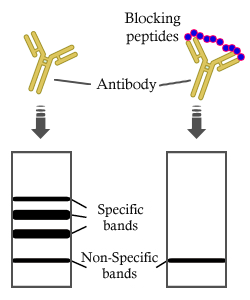
Product: GFAP Antibody
Catalog: AF6166
Description: Rabbit polyclonal antibody to GFAP
Application: WB
Cited expt.: WB
Reactivity: Human, Mouse, Rat
Prediction: Bovine, Horse
Mol.Wt.: 50kDa(Observed); 50kD(Calculated).
Uniprot: P14136
RRID: AB_2835032

View similar products>>

   Size Price Inventory
 100ul $280 In stock
 200ul $350 In stock

Lead Time: Same day delivery

For pricing and ordering contact:
Local distributors

Product Info

Source:
Rabbit
Application:
WB 1:500-1:2000
*The optimal dilutions should be determined by the end user. For optimal experimental results, antibody reuse is not recommended.
*Tips:

WB: For western blot detection of denatured protein samples. IHC: For immunohistochemical detection of paraffin sections (IHC-p) or frozen sections (IHC-f) of tissue samples. IF/ICC: For immunofluorescence detection of cell samples. ELISA(peptide): For ELISA detection of antigenic peptide.

Reactivity:
Human,Mouse,Rat
Prediction:
Bovine(100%), Horse(100%)
Clonality:
Polyclonal
Specificity:
GFAP Antibody detects endogenous levels of total GFAP.
RRID:
AB_2835032
Cite Format: Affinity Biosciences Cat# AF6166, RRID:AB_2835032.
Conjugate:
Unconjugated.
Purification:
The antiserum was purified by peptide affinity chromatography using SulfoLink™ Coupling Resin (Thermo Fisher Scientific).
Storage:
Rabbit IgG in phosphate buffered saline , pH 7.4, 150mM NaCl, 0.02% sodium azide and 50% glycerol. Store at -20 °C. Stable for 12 months from date of receipt.
Alias:

Fold/Unfold

wu:fb34h11; ALXDRD; cb345; etID36982.3; FLJ42474; FLJ45472; GFAP; GFAP_HUMAN; gfapl; Glial fibrillary acidic protein; Intermediate filament protein; wu:fk42c12; xx:af506734; zgc:110485;

Immunogens

Immunogen:

A synthesized peptide derived from human GFAP, corresponding to a region within N-terminal amino acids.

Uniprot:
Gene(ID):
Expression:
P14136 GFAP_HUMAN:

Expressed in cells lacking fibronectin.

Description:
This gene encodes one of the major intermediate filament proteins of mature astrocytes. It is used as a marker to distinguish astrocytes from other glial cells during development. Mutations in this gene cause Alexander disease, a rare disorder of astrocytes in the central nervous system. An additional transcript variant has been described, but its full length sequence has not been determined.
Sequence:
MERRRITSAARRSYVSSGEMMVGGLAPGRRLGPGTRLSLARMPPPLPTRVDFSLAGALNAGFKETRASERAEMMELNDRFASYIEKVRFLEQQNKALAAELNQLRAKEPTKLADVYQAELRELRLRLDQLTANSARLEVERDNLAQDLATVRQKLQDETNLRLEAENNLAAYRQEADEATLARLDLERKIESLEEEIRFLRKIHEEEVRELQEQLARQQVHVELDVAKPDLTAALKEIRTQYEAMASSNMHEAEEWYRSKFADLTDAAARNAELLRQAKHEANDYRRQLQSLTCDLESLRGTNESLERQMREQEERHVREAASYQEALARLEEEGQSLKDEMARHLQEYQDLLNVKLALDIEIATYRKLLEGEENRITIPVQTFSNLQIRETSLDTKSVSEGHLKRNIVVKTVEMRDGEVIKESKQEHKDVM

Predictions

Predictions:

Score>80(red) has high confidence and is suggested to be used for WB detection. *The prediction model is mainly based on the alignment of immunogen sequences, the results are for reference only, not as the basis of quality assurance.

Species
Results
Score
Horse
100
Bovine
100
Pig
0
Sheep
0
Dog
0
Xenopus
0
Zebrafish
0
Chicken
0
Rabbit
0
Model Confidence:
High(score>80) Medium(80>score>50) Low(score<50) No confidence

Research Backgrounds

Function:

GFAP, a class-III intermediate filament, is a cell-specific marker that, during the development of the central nervous system, distinguishes astrocytes from other glial cells.

PTMs:

Phosphorylated by PKN1.

Subcellular Location:

Cytoplasm.
Note: Associated with intermediate filaments.

Extracellular region or secreted Cytosol Plasma membrane Cytoskeleton Lysosome Endosome Peroxisome ER Golgi apparatus Nucleus Mitochondrion Manual annotation Automatic computational assertionSubcellular location
Tissue Specificity:

Expressed in cells lacking fibronectin.

Family&Domains:

Belongs to the intermediate filament family.

Research Fields

· Environmental Information Processing > Signal transduction > Jak-STAT signaling pathway.   (View pathway)

References

1). The effects of exosomes originating from different cell sources on the differentiation of bone marrow mesenchymal stem cells into schwann cells. Journal of nanobiotechnology, 2024 (PubMed: 38698449) [IF=10.2]

Application: WB    Species: Rat    Sample: BMSCs

Fig. 2 Protein expression of Schwann cell markers in differentiallyinduced BMSCs(n = 3). (A) Representative immunofluorescence micrographs showing the expression levels of Schwann cell markers (S100, GFAP, P75NGRF) in twelve experimental groups (BMSCs, BMSCs + ODM, BMSCs + RSC96-exos, BMSCs + Fb-exos, BMSCs + NSC-exos, BMSCs + ODM + RSC96-exos, BMSCs + ODM + Fb-exos, BMSCs + ODM + NSC-exos, induced BMSCs + RSC96-exos, induced BMSCs + Fb-exo, induced BMSCs + NSC-exo and RSC96) (magnification, x100). Scale bar, 50 μm. (B) Representative western blotting of the protein expression levels of S100, GFAP, and P75NGRF in the twelve groups

Application: IF/ICC    Species: Rat    Sample: BMSCs
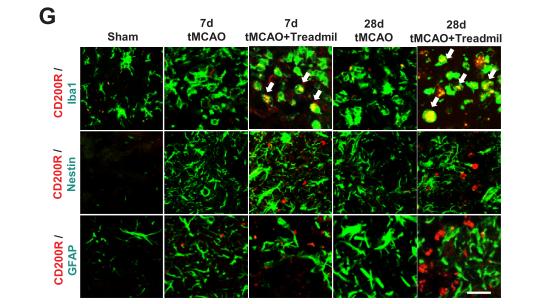
Fig. 2 Protein expression of Schwann cell markers in differentiallyinduced BMSCs(n = 3). (A) Representative immunofluorescence micrographs showing the expression levels of Schwann cell markers (S100, GFAP, P75NGRF) in twelve experimental groups (BMSCs, BMSCs + ODM, BMSCs + RSC96-exos, BMSCs + Fb-exos, BMSCs + NSC-exos, BMSCs + ODM + RSC96-exos, BMSCs + ODM + Fb-exos, BMSCs + ODM + NSC-exos, induced BMSCs + RSC96-exos, induced BMSCs + Fb-exo, induced BMSCs + NSC-exo and RSC96) (magnification, x100). Scale bar, 50 μm. (B) Representative western blotting of the protein expression levels of S100, GFAP, and P75NGRF in the twelve groups

2). Neurogenesis promoted by the CD200/CD200R signaling pathway following treadmill exercise enhances post-stroke functional recovery in rats. BRAIN BEHAVIOR AND IMMUNITY, 2019 (PubMed: 31513876) [IF=8.8]

Application: IF/ICC    Species: rat    Sample: astrocytes
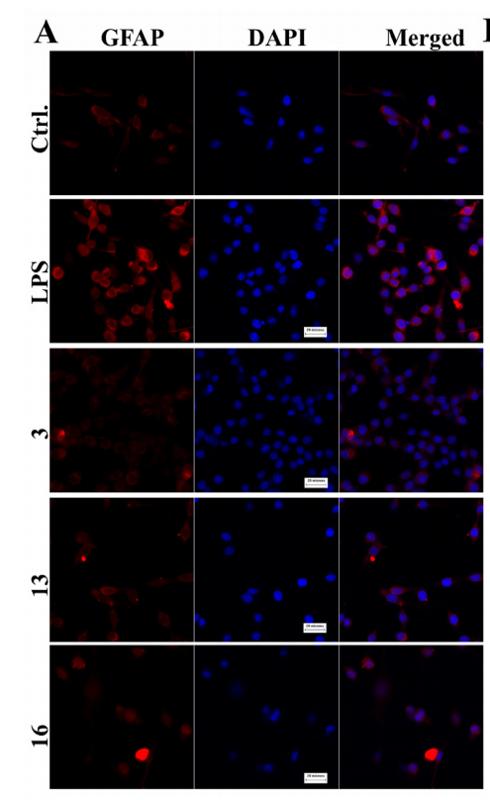
Fig. 5.| The expression of CD200 and CD200R was up-regulated induced by treadmill exercise after stroke in rats.The effect of treadmill exercise on the protein levels of CD200 and CD200R in the ischemic cortex (A-C) and hippocampus (D-F) at 7 and 28 days after tMCAO. CD200R staining shows protein expression at 7 and 28 days after treadmill exercise post-stroke (G). CD200R colocalizes with activated microglia (Iba1+cells, white arrows), not colocalizes with neural stem cells (Nestin+ cells) and astrocytes (GFAP+ cells), Scale bar: 50 μm. N = 4. Results are showed as means ± SEM. # P < 0.05, ## P < 0.01, ### P < 0.001 versus the Sham group. *P < 0.05, ** P < 0.01, *** P < 0.001 versus the tMCAO group.

3). Design, synthesis and bioactivity study of N-salicyloyl tryptamine derivatives as multifunctional agents for the treatment of neuroinflammation. EUROPEAN JOURNAL OF MEDICINAL CHEMISTRY, 2020 (PubMed: 32182488) [IF=6.0]

Application: IF/ICC    Species: Mouse    Sample: BV2 and C6 cells
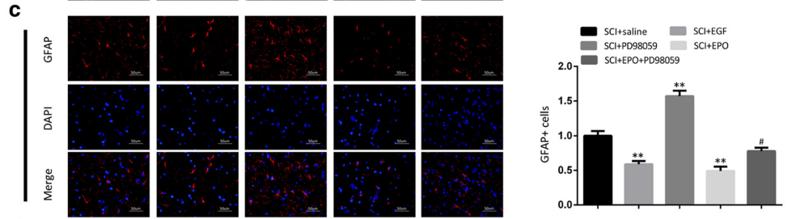
Fig. 4. Effects of compounds on GFAP and Iba-1 expression in the LPS-induced astrocytes (C6, treated with 10 mg/mL of LPS) and microglia (BV2, treated with 1 mg/mL of LPS). A. Representative fluorescence microscopy images of GFAP immunostaining (Magnification  20). B. Representative fluorescence microscopy images of Iba-1 immunostaining (Magnification  40). C. Histograms show relative changes of GFAP expressed as mean ± SD of the three independent experiments (n ¼ 3). Ctrl. ¼ Control, LPS ¼ Lipopolysaccharide (10 mg/mL); 3, 13, 16 ¼ treatments by compounds 3, 13, 16 (20 mM) along with LPS (10 mg/mL). D. Histograms show relative changes of Iba-1 expressed as mean ± SD of the three independent experiments (n ¼ 3). All the data were analyzed using Image Pro Plus and expressed as a percent of LPS group values (fluorescence intensity). (#) Significant difference (##p < 0.01, ###p < 0.001) vs. control and (*) significant difference (*p < 0.05 and **p < 0.01) vs. LPS.

4). Mechanistic study of the anti-excitatory amino acid toxicity of Bushen Zhichan decoction for Parkinson's disease based on the transcriptional regulation of EAAT1 by YY1. Journal of ethnopharmacology, 2024 (PubMed: 38350506) [IF=4.8]

5). Erythropoietin-Induced Autophagy Protects Against Spinal Cord Injury and Improves Neurological Function via the Extracellular-Regulated Protein Kinase Signaling Pathway. MOLECULAR NEUROBIOLOGY, 2020 (PubMed: 32647973) [IF=4.6]

Application: IF/ICC    Species: rat    Sample:

Fig. 6 |EPO benefit antiinflammation and axonal regeneration can be neutralized by ERK inhibition, and activator can mimic the effect of EPO. a The axonal special protein GAP43 immunofluorescence staining and histogram at 14 days (magnification × 400). b–e The inflammatory marker proteins immunofluorescence staining and histograms at 14 days, including CD86, GFAP, TNF-α, iNOS(magnification × 400). All data presented as mean ± SEM in each group. *p < 0.05 vs. SCI + saline group, **p < 0.01 vs. SCI + saline group. #p < 0.05 comparison between SCI + EPO group and SCI + EPO + PD98059, ##p < 0.01 comparison between SCI + EPO group and SCI + EPO + PD98059

6). ClassIIb histone deacetylase participates in perioperative neurocognitive disorders in elderly mice via HSP90/GR signaling pathway. Experimental neurology, 2024 (PubMed: 39142371) [IF=4.6]

7). Neuroprotective Effect of Abscisic Acid on MPTP-Induced Parkinson's Disease in Mice. Molecular nutrition & food research, 2025 (PubMed: 40357876) [IF=4.5]

8). Effect of Shenqi Jieyu formula on inflammatory response pathway in hippocampus of postpartum depression rats. Heliyon, 2024 (PubMed: 38726147) [IF=4.0]

Application: IHC    Species: Rat    Sample:

Fig. 11 Protein expression of GFAP‾(χ±s, n = 3) in hippocampi of rats in each group (200 × ). Protein expression of GFAP increased in PPD animals. SJF, AUDA, and paroxetine hydrochloride reversed the changes in protein expression of GFAP.

9). Synaptic Plasticity of Human Umbilical Cord Mesenchymal Stem Cell Differentiating into Neuron-like Cells In Vitro Induced by Edaravone. Stem Cells International, 2018 (PubMed: 30510585) [IF=3.8]

Application: WB    Species: human    Sample: neuron-like cells

Figure 8:| (a) Result of Western blot. (b) Relative expression level of protein.

10). Stem Cells in Cancer Progression and Therapy. Stem Cells International, 2019 (PubMed: 30949210) [IF=3.8]

Load more

Restrictive clause


Affinity Biosciences tests all products strictly. Citations are provided as a resource for additional applications that have not been validated by Affinity Biosciences. Please choose the appropriate format for each application and consult Materials and Methods sections for additional details about the use of any product in these publications.

For Research Use Only.
Not for use in diagnostic or therapeutic procedures. Not for resale. Not for distribution without written consent. Affinity Biosciences will not be held responsible for patent infringement or other violations that may occur with the use of our products. Affinity Biosciences, Affinity Biosciences Logo and all other trademarks are the property of Affinity Biosciences LTD.