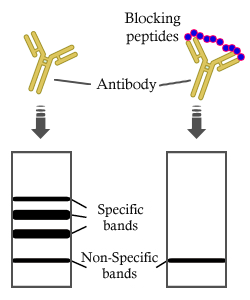
Product: Phospho-VE-Cadherin (Tyr658) Antibody
Catalog: AF8206
Description: Rabbit polyclonal antibody to Phospho-VE-Cadherin (Tyr658)
Application: WB
Cited expt.: WB
Reactivity: Human, Mouse
Prediction: Pig, Bovine, Horse, Sheep, Dog, Chicken
Mol.Wt.: 130kDa; 88kD(Calculated).
Uniprot: P33151
RRID: AB_2840268

View similar products>>

   Size Price Inventory
 100ul $350 In stock
 200ul $450 In stock

Lead Time: Same day delivery

For pricing and ordering contact:
Local distributors

Product Info

Source:
Rabbit
Application:
WB 1:1000-3000
*The optimal dilutions should be determined by the end user. For optimal experimental results, antibody reuse is not recommended.
*Tips:

WB: For western blot detection of denatured protein samples. IHC: For immunohistochemical detection of paraffin sections (IHC-p) or frozen sections (IHC-f) of tissue samples. IF/ICC: For immunofluorescence detection of cell samples. ELISA(peptide): For ELISA detection of antigenic peptide.

Reactivity:
Human,Mouse
Prediction:
Pig(100%), Bovine(100%), Horse(100%), Sheep(100%), Dog(100%), Chicken(100%)
Clonality:
Polyclonal
Specificity:
Phospho-VE-Cadherin (Tyr658) Antibody detects endogenous levels of VE-Cadherin only when phosphorylated at Tyr658.
RRID:
AB_2840268
Cite Format: Affinity Biosciences Cat# AF8206, RRID:AB_2840268.
Conjugate:
Unconjugated.
Purification:
The antibody is from purified rabbit serum by affinity purification via sequential chromatography on phospho-peptide and non-phospho-peptide affinity columns.
Storage:
Rabbit IgG in phosphate buffered saline , pH 7.4, 150mM NaCl, 0.02% sodium azide and 50% glycerol. Store at -20 °C. Stable for 12 months from date of receipt.
Alias:

Fold/Unfold

7B 4; 7B4; 7B4 antigen; CADH5_HUMAN; Cadherin 5; Cadherin 5 type 2; Cadherin 5, type 2 (vascular endothelium); Cadherin 5, type 2, VE cadherin (vascular epithelium); cadherin, vascular endothelial; cadherin, vascular endothelial, 1; Cadherin-5; Cadherin5; CD 144; CD144; CD144 antigen; CDH 5; CDH5; CDH5 protein; Endothelial specific cadherin; FLJ17376; OTTHUMP00000174777; Vascular endothelial cadherin; Vascular epithelium cadherin; VE Cad; VE-cadherin; VEC;

Immunogens

Immunogen:

A synthesized peptide derived from human VE-Cadherin around the phosphorylation site of Tyr658.

Uniprot:
Gene(ID):
Expression:
P33151 CADH5_HUMAN:

Endothelial tissues and brain.

Sequence:
MQRLMMLLATSGACLGLLAVAAVAAAGANPAQRDTHSLLPTHRRQKRDWIWNQMHIDEEKNTSLPHHVGKIKSSVSRKNAKYLLKGEYVGKVFRVDAETGDVFAIERLDRENISEYHLTAVIVDKDTGENLETPSSFTIKVHDVNDNWPVFTHRLFNASVPESSAVGTSVISVTAVDADDPTVGDHASVMYQILKGKEYFAIDNSGRIITITKSLDREKQARYEIVVEARDAQGLRGDSGTATVLVTLQDINDNFPFFTQTKYTFVVPEDTRVGTSVGSLFVEDPDEPQNRMTKYSILRGDYQDAFTIETNPAHNEGIIKPMKPLDYEYIQQYSFIVEATDPTIDLRYMSPPAGNRAQVIINITDVDEPPIFQQPFYHFQLKENQKKPLIGTVLAMDPDAARHSIGYSIRRTSDKGQFFRVTKKGDIYNEKELDREVYPWYNLTVEAKELDSTGTPTGKESIVQVHIEVLDENDNAPEFAKPYQPKVCENAVHGQLVLQISAIDKDITPRNVKFKFILNTENNFTLTDNHDNTANITVKYGQFDREHTKVHFLPVVISDNGMPSRTGTSTLTVAVCKCNEQGEFTFCEDMAAQVGVSIQAVVAILLCILTITVITLLIFLRRRLRKQARAHGKSVPEIHEQLVTYDEEGGGEMDTTSYDVSVLNSVRRGGAKPPRPALDARPSLYAQVQKPPRHAPGAHGGPGEMAAMIEVKKDEADHDGDGPPYDTLHIYGYEGSESIAESLSSLGTDSSDSDVDYDFLNDWGPRFKMLAELYGSDPREELLY

Predictions

Predictions:

Score>80(red) has high confidence and is suggested to be used for WB detection. *The prediction model is mainly based on the alignment of immunogen sequences, the results are for reference only, not as the basis of quality assurance.

Species
Results
Score
Pig
100
Horse
100
Bovine
100
Sheep
100
Dog
100
Chicken
100
Zebrafish
75
Xenopus
0
Rabbit
0
Model Confidence:
High(score>80) Medium(80>score>50) Low(score<50) No confidence

Research Backgrounds

Function:

Cadherins are calcium-dependent cell adhesion proteins (By similarity). They preferentially interact with themselves in a homophilic manner in connecting cells; cadherins may thus contribute to the sorting of heterogeneous cell types. This cadherin may play a important role in endothelial cell biology through control of the cohesion and organization of the intercellular junctions (By similarity). It associates with alpha-catenin forming a link to the cytoskeleton. Acts in concert with KRIT1 and MPP5 to establish and maintain correct endothelial cell polarity and vascular lumen (By similarity). These effects are mediated by recruitment and activation of the Par polarity complex and RAP1B. Required for activation of PRKCZ and for the localization of phosphorylated PRKCZ, PARD3, TIAM1 and RAP1B to the cell junction.

PTMs:

Phosphorylated on tyrosine residues by KDR/VEGFR-2. Dephosphorylated by PTPRB (By similarity).

O-glycosylated.

Subcellular Location:

Cell junction. Cell membrane>Single-pass type I membrane protein.
Note: Found at cell-cell boundaries and probably at cell-matrix boundaries. KRIT1 and CDH5 reciprocally regulate their localization to endothelial cell-cell junctions.

Extracellular region or secreted Cytosol Plasma membrane Cytoskeleton Lysosome Endosome Peroxisome ER Golgi apparatus Nucleus Mitochondrion Manual annotation Automatic computational assertionSubcellular location
Tissue Specificity:

Endothelial tissues and brain.

Family&Domains:

Three calcium ions are usually bound at the interface of each cadherin domain and rigidify the connections, imparting a strong curvature to the full-length ectodomain.

Research Fields

· Environmental Information Processing > Signaling molecules and interaction > Cell adhesion molecules (CAMs).   (View pathway)

· Organismal Systems > Immune system > Leukocyte transendothelial migration.   (View pathway)

References

1). SARS-CoV-2 spike spurs intestinal inflammation via VEGF production in enterocytes. EMBO molecular medicine, 2022 (PubMed: 35362189) [IF=9.0]

Application: WB    Species: Mouse    Sample:
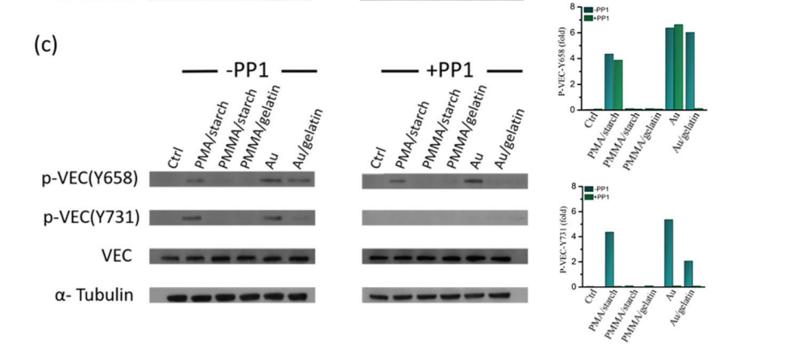
Figure 4. SARS‐CoV‐2 spike protein disrupts the vascular barrier via inhibiting endothelial VE‐cadherin A. The normalized fluorescence intensity of TRITC‐Dextran dye from co‐culture systems in which Caco‐2 cells were incubated with Control‐Fc or Spike RBD‐Fc after 24 h. For each group, n = 3. Data are from three independent biological experiments. B. The expression of junctional proteins ZO‐1, VE‐cadherin (VE‐cad), phosphorylated VE‐cad (pVE‐cad; 658), and pVE‐cad (731) in HUVECs co‐cultured with the supernatant of Caco‐2 cells that were treated with either Control‐Fc or Spike RBD‐Fc detected by Western blot. Protein expression was normalized to β‐actin. Data are from three independent biological experiments. C, D. Immunohistochemical staining shows levels of VE‐cad (C) and pVE‐cad (731) (D) in the duodenum tissue from COVID‐19 patients and healthy controls. Scale bars, 100 μm. For each group, n = 7. n, biologically independent samples (human specimen). E. Immunofluorescence analysis of VE‐cad expression and subcellular localization in Caco‐2 cells that were treated with Control‐Fc, Spike RBD‐Fc, or Spike RBD‐Fc combined with SCH772984 or Bevacizumab by confocal microscopy. VE‐cad staining in green and nuclear staining in blue. Scale bar, 20 µm. F. Fluorescence intensity of TRITC‐Dextran dye from co‐culture systems in which Caco‐2 cells were incubated with Control‐Fc, Spike RBD‐Fc, or Spike RBD‐Fc combined with SCH772984 or Bevacizumab. Data are from five technical replicates with similar results from three biological replicates. G. Immunohistochemical staining shows levels of VE‐cad and pVE‐cad (731) in the intestinal tissues of mice treated with Control‐Fc, Spike RBD‐Fc, or Spike RBD‐Fc combined with SCH772984 or Bevacizumab. Scale bar, 100 µm. For each group, n = 4. n, biologically independent samples (mice).

2). Stealthy nanoparticles protect endothelial barrier from leakiness by resisting the absorption of VE-cadherin. Nanoscale, 2021 (PubMed: 34259298) [IF=5.8]

Application: WB    Species: Human    Sample: HMVEC cells

Fig. 4 (a) Schematic showing the protein pull down experimental setup. Immunoblotting (left panel) and its semi-quantitative analysis (right panel) of (b) VEC, SOD1, claudin-5 and α-tublin from whole cell lysate and pulled down by different NPs. (c) Y658 (p-VEC(Y658)), Y731 (p-VEC(Y731), VEC and α-tublin from the whole cell lysate with/without the Src kinase inhibitor, PP1.

3). NMN Supplementation Inhibits Endothelial Cell ROS-Mediated Src/Pi3k/Akt Signaling Pathway to Protect High-Altitude Blood-Retinal Barrier. Investigative ophthalmology & visual science, 2025 (PubMed: 40249604) [IF=5.0]

Application: WB    Species: human    Sample: HUVECs

Figure 2. Exogenous administration of NMN protects endothelial cell barrier properties. HUVECs were placed in either normoxic conditions or a low oxygen-containing gas chamber (94% N2, 5% CO2, and 1% O2) for 24 hours of hypoxia treatment. NMN treatment meant dissolving NMN in the cell culture medium and incubating it 24 hours before hypoxia intervention, with NMN treatment in the normoxic group conducted simultaneously with the hypoxic group. (A) Showed the permeability of HUVECs monolayers (n = 3, independent experimental replicates), calculated as permeability = OD value of the lower chamber/(OD value of the upper chamber + OD value of the lower chamber). (B, C) Flow cytometry was used to detect apoptosis rates (n = 3, independent experimental replicates). Panel B shows the quantification results of panel C, where total apoptosis rate = Q2 value + Q3 value. In panel C, the X-axis represents the FITC channel, with positivity indicating Annexin-V staining of phosphatidylserine, and the Y-axis represents the PE channel, with positivity indicating propidium iodide (PI) staining of DNA. (D, E) Western blot analysis and quantification of phosphorylated and total VE-cadherin in HUVECs under different interventions (n = 3, independent experimental replicates). The signal for phosphorylated VE-cadherin was normalized to total VE-cadherin. The relative signal of phosphorylated VE-cadherin was normalized to the control group level (with each control group set to 1). β-Actin was used as a loading control. (F) Immunofluorescence staining was used to detect the expression of VE-cadherin (red) between HUVECs. Blue indicates DAPI staining. Scale bar = 20 µm. “Detail” shows a magnified view of the area within the yellow box in the image above. Values were expressed as the mean ± SD. One-way analysis of variance followed by Tukey's post hoc multiple comparison tests was used for panels A, B, and E. *P < 0.05; **P < 0.01; ***P < 0.001; ****P < 0.0001.

Restrictive clause


Affinity Biosciences tests all products strictly. Citations are provided as a resource for additional applications that have not been validated by Affinity Biosciences. Please choose the appropriate format for each application and consult Materials and Methods sections for additional details about the use of any product in these publications.

For Research Use Only.
Not for use in diagnostic or therapeutic procedures. Not for resale. Not for distribution without written consent. Affinity Biosciences will not be held responsible for patent infringement or other violations that may occur with the use of our products. Affinity Biosciences, Affinity Biosciences Logo and all other trademarks are the property of Affinity Biosciences LTD.