Product: Aggrecan Antibody
Catalog: DF7561
Description: Rabbit polyclonal antibody to Aggrecan
Application: WB IHC IF/ICC
Cited expt.: WB, IHC, IF/ICC
Reactivity: Human, Mouse, Rat
Prediction: Pig, Bovine, Sheep, Rabbit, Dog
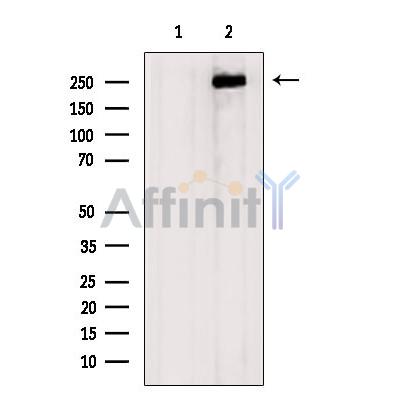
Mol.Wt.: 70,150,250 kDa; 261kD(Calculated).
Uniprot: P16112
RRID: AB_2841055

View similar products>>

   Size Price Inventory
 100ul $280 In stock
 200ul $350 In stock

Lead Time: Same day delivery

For pricing and ordering contact:
Local distributors

Product Info

Source:
Rabbit
Application:
WB 1:1000-3000, IF/ICC 1:100-1:500, IHC 1:50-1:200
*The optimal dilutions should be determined by the end user. For optimal experimental results, antibody reuse is not recommended.
*Tips:

WB: For western blot detection of denatured protein samples. IHC: For immunohistochemical detection of paraffin sections (IHC-p) or frozen sections (IHC-f) of tissue samples. IF/ICC: For immunofluorescence detection of cell samples. ELISA(peptide): For ELISA detection of antigenic peptide.

Reactivity:
Human,Mouse,Rat
Prediction:
Pig(100%), Bovine(100%), Sheep(100%), Rabbit(100%), Dog(100%)
Clonality:
Polyclonal
Specificity:
Aggrecan Antibody detects endogenous levels of total Aggrecan.
RRID:
AB_2841055
Cite Format: Affinity Biosciences Cat# DF7561, RRID:AB_2841055.
Conjugate:
Unconjugated.
Purification:
The antiserum was purified by peptide affinity chromatography using SulfoLink™ Coupling Resin (Thermo Fisher Scientific).
Storage:
Rabbit IgG in phosphate buffered saline , pH 7.4, 150mM NaCl, 0.02% sodium azide and 50% glycerol. Store at -20 °C. Stable for 12 months from date of receipt.
Alias:

Fold/Unfold

ACAN; AGC 1; AGC1; AGCAN; Aggrecan 1 (chondroitin sulfate proteoglycan 1, large aggregating proteoglycan, antigen identified by monoclonal antibody A0122); Aggrecan 1; Aggrecan core protein; Aggrecan proteoglycan; Aggrecan structural proteoglycan of cartilage; Aggrecan1; ATEGQV; Cartilage specific proteoglycan core protein; Chondroitin sulfate proteoglycan 1; Chondroitin sulfate proteoglycan 1 large aggregating proteoglycan antigen identified by monoclonal antibody A0122; Chondroitin sulfate proteoglycan core protein 1; CSPG 1; CSPG1; CSPGCP; JSCATE; Large aggregating proteoglycan; mcspg; mgsk16; MSK 16; MSK16; SEDK;

Immunogens

Immunogen:

A synthesized peptide derived from human Aggrecan, corresponding to a region within N-terminal amino acids.

Uniprot:
Gene(ID):
Expression:
P16112 PGCA_HUMAN:

Restricted to cartilages.

Sequence:
MTTLLWVFVTLRVITAAVTVETSDHDNSLSVSIPQPSPLRVLLGTSLTIPCYFIDPMHPVTTAPSTAPLAPRIKWSRVSKEKEVVLLVATEGRVRVNSAYQDKVSLPNYPAIPSDATLEVQSLRSNDSGVYRCEVMHGIEDSEATLEVVVKGIVFHYRAISTRYTLDFDRAQRACLQNSAIIATPEQLQAAYEDGFHQCDAGWLADQTVRYPIHTPREGCYGDKDEFPGVRTYGIRDTNETYDVYCFAEEMEGEVFYATSPEKFTFQEAANECRRLGARLATTGQLYLAWQAGMDMCSAGWLADRSVRYPISKARPNCGGNLLGVRTVYVHANQTGYPDPSSRYDAICYTGEDFVDIPENFFGVGGEEDITVQTVTWPDMELPLPRNITEGEARGSVILTVKPIFEVSPSPLEPEEPFTFAPEIGATAFAEVENETGEATRPWGFPTPGLGPATAFTSEDLVVQVTAVPGQPHLPGGVVFHYRPGPTRYSLTFEEAQQACLRTGAVIASPEQLQAAYEAGYEQCDAGWLRDQTVRYPIVSPRTPCVGDKDSSPGVRTYGVRPSTETYDVYCFVDRLEGEVFFATRLEQFTFQEALEFCESHNATLATTGQLYAAWSRGLDKCYAGWLADGSLRYPIVTPRPACGGDKPGVRTVYLYPNQTGLPDPLSRHHAFCFRGISAVPSPGEEEGGTPTSPSGVEEWIVTQVVPGVAAVPVEEETTAVPSGETTAILEFTTEPENQTEWEPAYTPVGTSPLPGILPTWPPTGAATEESTEGPSATEVPSASEEPSPSEVPFPSEEPSPSEEPFPSVRPFPSVELFPSEEPFPSKEPSPSEEPSASEEPYTPSPPVPSWTELPSSGEESGAPDVSGDFTGSGDVSGHLDFSGQLSGDRASGLPSGDLDSSGLTSTVGSGLPVESGLPSGDEERIEWPSTPTVGELPSGAEILEGSASGVGDLSGLPSGEVLETSASGVGDLSGLPSGEVLETTAPGVEDISGLPSGEVLETTAPGVEDISGLPSGEVLETTAPGVEDISGLPSGEVLETTAPGVEDISGLPSGEVLETTAPGVEDISGLPSGEVLETTAPGVEDISGLPSGEVLETAAPGVEDISGLPSGEVLETAAPGVEDISGLPSGEVLETAAPGVEDISGLPSGEVLETAAPGVEDISGLPSGEVLETAAPGVEDISGLPSGEVLETAAPGVEDISGLPSGEVLETAAPGVEDISGLPSGEVLETAAPGVEDISGLPSGEVLETAAPGVEDISGLPSGEVLETAAPGVEDISGLPSGEVLETAAPGVEDISGLPSGEVLETAAPGVEDISGLPSGEVLETAAPGVEDISGLPSGEVLETAAPGVEDISGLPSGEVLETAAPGVEDISGLPSGEVLETAAPGVEDISGLPSGEVLETTAPGVEEISGLPSGEVLETTAPGVDEISGLPSGEVLETTAPGVEEISGLPSGEVLETSTSAVGDLSGLPSGGEVLEISVSGVEDISGLPSGEVVETSASGIEDVSELPSGEGLETSASGVEDLSRLPSGEEVLEISASGFGDLSGLPSGGEGLETSASEVGTDLSGLPSGREGLETSASGAEDLSGLPSGKEDLVGSASGDLDLGKLPSGTLGSGQAPETSGLPSGFSGEYSGVDLGSGPPSGLPDFSGLPSGFPTVSLVDSTLVEVVTASTASELEGRGTIGISGAGEISGLPSSELDISGRASGLPSGTELSGQASGSPDVSGEIPGLFGVSGQPSGFPDTSGETSGVTELSGLSSGQPGISGEASGVLYGTSQPFGITDLSGETSGVPDLSGQPSGLPGFSGATSGVPDLVSGTTSGSGESSGITFVDTSLVEVAPTTFKEEEGLGSVELSGLPSGEADLSGKSGMVDVSGQFSGTVDSSGFTSQTPEFSGLPSGIAEVSGESSRAEIGSSLPSGAYYGSGTPSSFPTVSLVDRTLVESVTQAPTAQEAGEGPSGILELSGAHSGAPDMSGEHSGFLDLSGLQSGLIEPSGEPPGTPYFSGDFASTTNVSGESSVAMGTSGEASGLPEVTLITSEFVEGVTEPTISQELGQRPPVTHTPQLFESSGKVSTAGDISGATPVLPGSGVEVSSVPESSSETSAYPEAGFGASAAPEASREDSGSPDLSETTSAFHEANLERSSGLGVSGSTLTFQEGEASAAPEVSGESTTTSDVGTEAPGLPSATPTASGDRTEISGDLSGHTSQLGVVISTSIPESEWTQQTQRPAETHLEIESSSLLYSGEETHTVETATSPTDASIPASPEWKRESESTAAAPARSCAEEPCGAGTCKETEGHVICLCPPGYTGEHCNIDQEVCEEGWNKYQGHCYRHFPDRETWVDAERRCREQQSHLSSIVTPEEQEFVNNNAQDYQWIGLNDRTIEGDFRWSDGHPMQFENWRPNQPDNFFAAGEDCVVMIWHEKGEWNDVPCNYHLPFTCKKGTVACGEPPVVEHARTFGQKKDRYEINSLVRYQCTEGFVQRHMPTIRCQPSGHWEEPQITCTDPTTYKRRLQKRSSRHPRRSRPSTAH

Predictions

Predictions:

Score>80(red) has high confidence and is suggested to be used for WB detection. *The prediction model is mainly based on the alignment of immunogen sequences, the results are for reference only, not as the basis of quality assurance.

Species
Results
Score
Pig
100
Bovine
100
Sheep
100
Dog
100
Rabbit
100
Horse
78
Chicken
67
Xenopus
0
Zebrafish
0
Model Confidence:
High(score>80) Medium(80>score>50) Low(score<50) No confidence

Research Backgrounds

Function:

This proteoglycan is a major component of extracellular matrix of cartilagenous tissues. A major function of this protein is to resist compression in cartilage. It binds avidly to hyaluronic acid via an N-terminal globular region.

PTMs:

Contains mostly chondroitin sulfate, but also keratan sulfate chains, N-linked and O-linked oligosaccharides. The release of aggrecan fragments from articular cartilage into the synovial fluid at all stages of human osteoarthritis is the result of cleavage by aggrecanase.

Subcellular Location:

Secreted>Extracellular space>Extracellular matrix.

Extracellular region or secreted Cytosol Plasma membrane Cytoskeleton Lysosome Endosome Peroxisome ER Golgi apparatus Nucleus Mitochondrion Manual annotation Automatic computational assertionSubcellular location
Tissue Specificity:

Restricted to cartilages.

Family&Domains:

Two globular domains, G1 and G2, comprise the N-terminus of the proteoglycan, while another globular region, G3, makes up the C-terminus. G1 contains Link domains and thus consists of three disulfide-bonded loop structures designated as the A, B, B' motifs. G2 is similar to G1. The keratan sulfate (KS) and the chondroitin sulfate (CS) attachment domains lie between G2 and G3.

Belongs to the aggrecan/versican proteoglycan family.

References

1). Hydrogen Ion Capturing Hydrogel Microspheres for Reversing Inflammaging. Advanced materials (Deerfield Beach, Fla.), 2024 (PubMed: 37699155) [IF=27.4]

2). An anti-inflammatory and neuroprotective biomimetic nanoplatform for repairing spinal cord injury. Bioactive Materials, 2022 (PubMed: 35845318) [IF=18.9]

3). Bioactive Patch for Rotator Cuff Repairing via Enhancing Tendon-to-Bone Healing: A Large Animal Study and Short-Term Outcome of a Clinical Trial. Advanced science (Weinheim, Baden-Wurttemberg, Germany), 2024 (PubMed: 38922803) [IF=15.1]

Application: IF/ICC    Species: human    Sample: BMSCs

Figure 6 Chondrogenic evaluation of UC extracts. A–C) Immunofluorescence staining for Aggrecan, SOX9 and COL-II in BMSCs under different induction conditions. D,E) Positive rate and mean fluorescence intensity of Immunofluorescence. F,G) Western-blot of Aggrecan, SOX9 and COL-II in BMSCs under different induction conditions. H) Chondrogenic pellet evaluation by staining under different induction conditions. I) Positive rate of immunohistochemistry of pellet staining. The results are presented as means ± SD. (*P < 0.05 compared with control.).

Application: WB    Species: human    Sample: BMSCs

Figure 6 Chondrogenic evaluation of UC extracts. A–C) Immunofluorescence staining for Aggrecan, SOX9 and COL-II in BMSCs under different induction conditions. D,E) Positive rate and mean fluorescence intensity of Immunofluorescence. F,G) Western-blot of Aggrecan, SOX9 and COL-II in BMSCs under different induction conditions. H) Chondrogenic pellet evaluation by staining under different induction conditions. I) Positive rate of immunohistochemistry of pellet staining. The results are presented as means ± SD. (*P < 0.05 compared with control.).

4). Cartilage-Penetrating Framework Nucleic Acid Nanoparticles Ameliorate Osteoarthritis by Promoting Drug Delivery and Chondrocyte Uptake. Advanced science (Weinheim, Baden-Wurttemberg, Germany), 2025 (PubMed: 40192172) [IF=15.1]

5). Glycolysis-Derived Lactate Induces ACSL4 Expression and Lactylation to Activate Ferroptosis during Intervertebral Disc Degeneration. Advanced science (Weinheim, Baden-Wurttemberg, Germany), 2025 (PubMed: 40171826) [IF=15.1]

6). A high-resolution route map reveals distinct stages of chondrocyte dedifferentiation for cartilage regeneration. Bone research, 2022 (PubMed: 35477573) [IF=14.3]

7). Sustained therapeutic effects of self-assembled hyaluronic acid nanoparticles loaded with α-Ketoglutarate in various osteoarthritis stages. Biomaterials, 2024 (PubMed: 39326362) [IF=12.8]

Application: IHC    Species: Mouse    Sample:

Fig. 9. αKG protects articular cartilage by modulating cartilage matrix homeostasis. Immunohistochemistry staining of Col2a1, Acan, MMP13, and Adamts4 in the knee joint cartilage of advanced OA mice under different treatments.

8). Cell Shock Absorption via Stress Relaxation Hydrogel Microspheres for Alleviating Endoplasmic Reticulum Stress in Chondrocytes. Research (Washington, D.C.), 2025 (PubMed: 40678150) [IF=11.0]

Application: IF/ICC    Species: Rat    Sample:

Fig. 4. Stressed-relaxed HAMA@Lip exhibits good biocompatibility and alleviates chondrocyte ERS and OA phenotypes. (A) CCK-8 assay results for chondrocytes treated with blank, Lip, stress-relaxed HAMA, and stress-relaxed HAMA@Lip on days 1, 2, and 3 (Blank, Lipo-Wyrgrl@TUDCA; Stress-relaxed HAMA; Stress-relaxed HAMA@Lipo). (B) Cell growth curves under different concentrations of tunicamycin. (C and D) ThT staining results and corresponding fluorescence quantification for different treatment groups (n = 3). (E and F) Col II staining results and corresponding fluorescence quantification for different treatment groups (n = 3). (G and H) Aggrecan staining results and corresponding fluorescence quantification for different treatment groups (n = 3). (I and J) MMP13 staining results and corresponding fluorescence quantification for different treatment groups (n = 3). One-way ANOVA with Tukey’s post hoc test. ns: no significance, *P < 0.05, **P < 0.01.

9). The deubiquitinase USP11 ameliorates intervertebral disc degeneration by regulating oxidative stress-induced ferroptosis via deubiquitinating and stabilizing Sirt3. Redox biology, 2023 (PubMed: 37099926) [IF=10.7]

10). HAMA-SBMA hydrogel with anti-inflammatory properties delivers cartilage organoids, boosting cartilage regeneration. Journal of nanobiotechnology, 2025 (PubMed: 40448111) [IF=10.2]

Application: IF/ICC    Species: Rat    Sample:

Fig. 1 CCO exhibits characteristics of articular cartilage and delays the process of ossification. (A) SO, staining of the CEP. CEP had a quasi-spherical shape. (B) DAPI staining. CEP decellularization of nuclei. (C) DNA content, GAG content, and Total collagen content measurement. CEP was decellularized, preserving a significant amount of GAG and collagen. (D) Cell viability and cytotoxicity assay using Calcein/PI at D1, D3, and D7, with live cells shown in green and dead cells in red. CEP exhibits good biocompatibility. (E) CCK-8 assay at D1, D3, and D7. CEP can promote the proliferation of BMSCs. (F) HE and AB staining of CO and CCO on days 7, 14, and 21. CCO can generate a greater amount of cartilage matrix. (G) Immunofluorescence images for COL2, ACAN in CO and CCO at days 14, with blue representing DAPI and red representing the target proteins. The cartilage markers COL2 and ACAN are expressed at higher levels in CCO. (H)Immunohistochemical images for PRG4 in CO and CCO at days 14 and Immunofluorescence images for COLX in CO and CCO at days 21 with blue representing DAPI and red representing the target proteins. CCO exhibits high expressions of the articular cartilage-specific marker PRG4 and low expressions of the hypertrophic cartilage marker COLX. (I) The mRNA expression of cartilage genes SOX9, COL2, and ACAN, as well as the hypertrophic cartilage gene COLX, was assessed in CO and CCO at 0, 7, 14, and 21 days. Both CCO and CO reached peak cartilage expression in 14 days, after which the expression of hypertrophy-related genes increased. However, CCO demonstrated superior cartilage formation compared to CO, with a delayed hypertrophic process. All experiments were repeated three times. ns p > 0.05, *0.01 

Load more

Restrictive clause


Affinity Biosciences tests all products strictly. Citations are provided as a resource for additional applications that have not been validated by Affinity Biosciences. Please choose the appropriate format for each application and consult Materials and Methods sections for additional details about the use of any product in these publications.

For Research Use Only.
Not for use in diagnostic or therapeutic procedures. Not for resale. Not for distribution without written consent. Affinity Biosciences will not be held responsible for patent infringement or other violations that may occur with the use of our products. Affinity Biosciences, Affinity Biosciences Logo and all other trademarks are the property of Affinity Biosciences LTD.