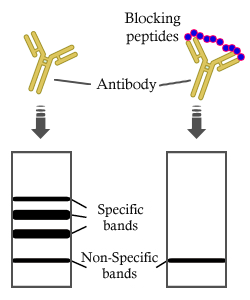
Product: SP2 Antibody
Catalog: DF8721
Description: Rabbit polyclonal antibody to SP2
Application: WB IHC IF/ICC
Cited expt.: WB, IHC
Reactivity: Human, Mouse
Prediction: Pig, Bovine, Horse, Sheep, Rabbit, Dog
Mol.Wt.: 64 kDa; 65kD(Calculated).
Uniprot: Q02086
RRID: AB_2841925

View similar products>>

   Size Price Inventory
 100ul $280 In stock
 200ul $350 In stock

Lead Time: Same day delivery

For pricing and ordering contact:
Local distributors

Product Info

Source:
Rabbit
Application:
IHC 1:50-1:200, WB 1:1000-3000, IF/ICC 1:100-1:500
*The optimal dilutions should be determined by the end user. For optimal experimental results, antibody reuse is not recommended.
*Tips:

WB: For western blot detection of denatured protein samples. IHC: For immunohistochemical detection of paraffin sections (IHC-p) or frozen sections (IHC-f) of tissue samples. IF/ICC: For immunofluorescence detection of cell samples. ELISA(peptide): For ELISA detection of antigenic peptide.

Reactivity:
Human,Mouse
Prediction:
Pig(88%), Bovine(88%), Horse(88%), Sheep(88%), Rabbit(100%), Dog(88%)
Clonality:
Polyclonal
Specificity:
SP2 Antibody detects endogenous levels of total SP2.
RRID:
AB_2841925
Cite Format: Affinity Biosciences Cat# DF8721, RRID:AB_2841925.
Conjugate:
Unconjugated.
Purification:
The antiserum was purified by peptide affinity chromatography using SulfoLink™ Coupling Resin (Thermo Fisher Scientific).
Storage:
Rabbit IgG in phosphate buffered saline , pH 7.4, 150mM NaCl, 0.02% sodium azide and 50% glycerol. Store at -20 °C. Stable for 12 months from date of receipt.
Alias:

Fold/Unfold

Kiaa0048; OTTHUMP00000196580; SP2; SP2_HUMAN; SPECIFICITY PROTEIN 2; Transcription factor Sp2;

Immunogens

Immunogen:

A synthesized peptide derived from human SP2, corresponding to a region within C-terminal amino acids.

Uniprot:
Gene(ID):
Sequence:
MSDPQTSMAATAAVSPSDYLQPAASTTQDSQPSPLALLAATCSKIGPPAVEAAVTPPAPPQPTPRKLVPIKPAPLPLSPGKNSFGILSSKGNILQIQGSQLSASYPGGQLVFAIQNPTMINKGTRSNANIQYQAVPQIQASNSQTIQVQPNLTNQIQIIPGTNQAIITPSPSSHKPVPIKPAPIQKSSTTTTPVQSGANVVKLTGGGGNVTLTLPVNNLVNASDTGAPTQLLTESPPTPLSKTNKKARKKSLPASQPPVAVAEQVETVLIETTADNIIQAGNNLLIVQSPGGGQPAVVQQVQVVPPKAEQQQVVQIPQQALRVVQAASATLPTVPQKPSQNFQIQAAEPTPTQVYIRTPSGEVQTVLVQDSPPATAAATSNTTCSSPASRAPHLSGTSKKHSAAILRKERPLPKIAPAGSIISLNAAQLAAAAQAMQTININGVQVQGVPVTITNTGGQQQLTVQNVSGNNLTISGLSPTQIQLQMEQALAGETQPGEKRRRMACTCPNCKDGEKRSGEQGKKKHVCHIPDCGKTFRKTSLLRAHVRLHTGERPFVCNWFFCGKRFTRSDELQRHARTHTGDKRFECAQCQKRFMRSDHLTKHYKTHLVTKNL

Predictions

Predictions:

Score>80(red) has high confidence and is suggested to be used for WB detection. *The prediction model is mainly based on the alignment of immunogen sequences, the results are for reference only, not as the basis of quality assurance.

Species
Results
Score
Rabbit
100
Pig
88
Horse
88
Bovine
88
Sheep
88
Dog
88
Xenopus
0
Zebrafish
0
Chicken
0
Model Confidence:
High(score>80) Medium(80>score>50) Low(score<50) No confidence

Research Backgrounds

Function:

Binds to GC box promoters elements and selectively activates mRNA synthesis from genes that contain functional recognition sites.

Subcellular Location:

Nucleus.

Extracellular region or secreted Cytosol Plasma membrane Cytoskeleton Lysosome Endosome Peroxisome ER Golgi apparatus Nucleus Mitochondrion Manual annotation Automatic computational assertionSubcellular location
Family&Domains:

The 9aaTAD motif is a transactivation domain present in a large number of yeast and animal transcription factors. In SP2, the motif is inactive.

Belongs to the Sp1 C2H2-type zinc-finger protein family.

References

1). DAPK3 is Essential for DBP-Induced Autophagy of Mouse Leydig Cells. Advanced science (Weinheim, Baden-Wurttemberg, Germany), 2025 (PubMed: 40047320) [IF=15.1]

Application: WB    Species: Mouse    Sample: TM3 cells

Figure 4 Transcription of the Dapk3 gene is promoted by Sp2. A) Three potential REs of the Dapk3 gene were predicted by the JASPAR database. B–G) TM3 cells were transfected with 0, 2, and 4 µg pcDNA3.1-Sp2 for 48 h or 250 pmol µL−1 si-Sp2 for 24 h, and the mRNA and protein levels of DAPK3 were determined. H–J) After TM3 cells were exposed to 0 or 400 µm DBP for 24 h in the presence or absence of 250 pmol µL−1 si-Sp2, the mRNA and protein contents of DAPK3 were detected. K) After TM3 cells were transfected with pcDNA3.1 or pcDNA3.1-Sp2 in the presence or absence of pGL4.2-Dapk3 prom, the luciferase activity was detected. L) TM3 cells were transfected with pGL4.2-RE1, pGL4.2-RE2, or pGL4.2-RE3 together with or without pcDNA3.1-Sp2, the luciferase activity was then determined. M) After TM3 cells were transfected with pcDNA3.1 or pcDNA3.1-Sp2 in the presence of pGL4.2-RE3 or pGL4.2-mutRE3, the luciferase activity was determined. N) The binding of Sp2 to the RE3 site of the Dapk3 gene was verified by ChIP-qPCR. Data are represented as means ± SEM, n = 3. *P < 0.05, by one-way ANOVA with LSD method (B, D, H, J, K, and M) or independent sample t-test (E, G, L, and N).

2). Melatonin alleviates di-butyl phthalate (DBP)-induced ferroptosis of mouse leydig cells via inhibiting Sp2/VDAC2 signals. Environmental research, 2024 (PubMed: 38246300) [IF=7.7]

Application: IHC    Species: Mouse    Sample:

Fig. 2. Sp2 is essential for DBP-induced ferroptosis of mouse Leydig cells. (A) Adult male mice were exposed to 0–500 mg/kg DBP for 28 d, and the expression of Sp2 in the testis tissue was determined by immunohistochemistry. (B, C) The mRNA and protein levels of Sp2 were detected after TM3 cells were treated with 0–400 μM DBP for 24 h. The protein levels of TFR and GPX4 (D), the mitochondrial morphology (E), and the intracellular Fe2+ concentration (F, G) were determined after TM3 cells were transfected with 0, 2 and 4 μg pcDNA3.1-Sp2 for 48 h. The protein levels of TFR and GPX4 (H), and the intracellular Fe2+ concentration (I, J) were detected after TM3 cells were transfected with 250 pmol/μl si-Sp2 for 24 h. The protein levels of TFR and GPX4 (K), the intracellular Fe2+ concentration (L, M), and the mitochondrial morphology (N) were determined after TM3 cells were treated with 0 or 400 μM DBP for 24 h with or without Sp2 knockdown. *P < 0.05.

Restrictive clause


Affinity Biosciences tests all products strictly. Citations are provided as a resource for additional applications that have not been validated by Affinity Biosciences. Please choose the appropriate format for each application and consult Materials and Methods sections for additional details about the use of any product in these publications.

For Research Use Only.
Not for use in diagnostic or therapeutic procedures. Not for resale. Not for distribution without written consent. Affinity Biosciences will not be held responsible for patent infringement or other violations that may occur with the use of our products. Affinity Biosciences, Affinity Biosciences Logo and all other trademarks are the property of Affinity Biosciences LTD.