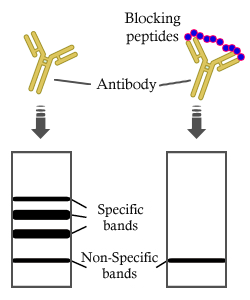
Product: ATG7 Antibody
Catalog: DF6130
Description: Rabbit polyclonal antibody to ATG7
Application: WB IHC
Cited expt.: WB, IHC
Reactivity: Human, Mouse, Rat
Prediction: Pig, Bovine, Horse, Sheep, Rabbit, Dog, Chicken
Mol.Wt.: 78kDa; 78kD(Calculated).
Uniprot: O95352
RRID: AB_2838097

View similar products>>

   Size Price Inventory
 100ul $280 In stock
 200ul $350 In stock

Lead Time: Same day delivery

For pricing and ordering contact:
Local distributors

Product Info

Source:
Rabbit
Application:
WB 1:500-1:2000, IHC 1:50-1:200
*The optimal dilutions should be determined by the end user. For optimal experimental results, antibody reuse is not recommended.
*Tips:

WB: For western blot detection of denatured protein samples. IHC: For immunohistochemical detection of paraffin sections (IHC-p) or frozen sections (IHC-f) of tissue samples. IF/ICC: For immunofluorescence detection of cell samples. ELISA(peptide): For ELISA detection of antigenic peptide.

Reactivity:
Human,Mouse,Rat
Prediction:
Pig(90%), Bovine(100%), Horse(90%), Sheep(100%), Rabbit(100%), Dog(100%), Chicken(80%)
Clonality:
Polyclonal
Specificity:
ATG7 Antibody detects endogenous levels of total ATG7.
RRID:
AB_2838097
Cite Format: Affinity Biosciences Cat# DF6130, RRID:AB_2838097.
Conjugate:
Unconjugated.
Purification:
The antiserum was purified by peptide affinity chromatography using SulfoLink™ Coupling Resin (Thermo Fisher Scientific).
Storage:
Rabbit IgG in phosphate buffered saline , pH 7.4, 150mM NaCl, 0.02% sodium azide and 50% glycerol. Store at -20 °C. Stable for 12 months from date of receipt.
Alias:

Fold/Unfold

1810013K23Rik; Apg 7; APG7 autophagy 7 like; APG7 autophagy 7-like (S. cerevisiae); APG7 like; APG7, S. cerevisiae, homolog of; APG7-like; APG7L; ATG 7; ATG12-activating enzyme E1 ATG7; ATG7; ATG7 autophagy related 7 homolog (S. cerevisiae); ATG7 autophagy related 7 homolog; ATG7_HUMAN; Atg7l; Autophagy 7, S. cerevisiae, homolog of; Autophagy related protein 7; Autophagy-related 7 (yeast); Autophagy-related protein 7; DKFZp434N0735; GSA 7; GSA7; hAGP7; Ubiquitin activating enzyme E1 like protein; Ubiquitin-activating enzyme E1-like protein; Ubiquitin-like modifier-activating enzyme ATG7;

Immunogens

Immunogen:

A synthesized peptide derived from human ATG7, corresponding to a region within N-terminal amino acids.

Uniprot:
Gene(ID):
Expression:
O95352 ATG7_HUMAN:

Widely expressed, especially in kidney, liver, lymph nodes and bone marrow.

Description:
Autophagy is a catabolic process for the autophagosomic-lysosomal degradation of bulk cytoplasmic contents (1,2). Autophagy is generally activated by conditions of nutrient deprivation but has also been associated with a number of physiological processes including development, differentiation, neurodegeneration, infection, and cancer (3). The molecular machinery of autophagy was largely discovered in yeast and referred to as autophagy-related (Atg) genes. Formation of the autophagosome involves a ubiquitin-like conjugation system in which Atg12 is covalently bound to Atg5 and targeted to autophagosome vesicles (4-6). This conjugation reaction is mediated by the ubiquitin E1-like enzyme Atg7 and the E2-like enzyme Atg10 (7,8).
Sequence:
MAAATGDPGLSKLQFAPFSSALDVGFWHELTQKKLNEYRLDEAPKDIKGYYYNGDSAGLPARLTLEFSAFDMSAPTPARCCPAIGTLYNTNTLESFKTADKKLLLEQAANEIWESIKSGTALENPVLLNKFLLLTFADLKKYHFYYWFCYPALCLPESLPLIQGPVGLDQRFSLKQIEALECAYDNLCQTEGVTALPYFLIKYDENMVLVSLLKHYSDFFQGQRTKITIGVYDPCNLAQYPGWPLRNFLVLAAHRWSSSFQSVEVVCFRDRTMQGARDVAHSIIFEVKLPEMAFSPDCPKAVGWEKNQKGGMGPRMVNLSECMDPKRLAESSVDLNLKLMCWRLVPTLDLDKVVSVKCLLLGAGTLGCNVARTLMGWGVRHITFVDNAKISYSNPVRQPLYEFEDCLGGGKPKALAAADRLQKIFPGVNARGFNMSIPMPGHPVNFSSVTLEQARRDVEQLEQLIESHDVVFLLMDTRESRWLPAVIAASKRKLVINAALGFDTFVVMRHGLKKPKQQGAGDLCPNHPVASADLLGSSLFANIPGYKLGCYFCNDVVAPGDSTRDRTLDQQCTVSRPGLAVIAGALAVELMVSVLQHPEGGYAIASSSDDRMNEPPTSLGLVPHQIRGFLSRFDNVLPVSLAFDKCTACSSKVLDQYEREGFNFLAKVFNSSHSFLEDLTGLTLLHQETQAAEIWDMSDDETI

Predictions

Predictions:

Score>80(red) has high confidence and is suggested to be used for WB detection. *The prediction model is mainly based on the alignment of immunogen sequences, the results are for reference only, not as the basis of quality assurance.

Species
Results
Score
Bovine
100
Sheep
100
Dog
100
Rabbit
100
Pig
90
Horse
90
Chicken
80
Xenopus
0
Zebrafish
0
Model Confidence:
High(score>80) Medium(80>score>50) Low(score<50) No confidence

Research Backgrounds

Function:

E1-like activating enzyme involved in the 2 ubiquitin-like systems required for cytoplasm to vacuole transport (Cvt) and autophagy. Activates ATG12 for its conjugation with ATG5 as well as the ATG8 family proteins for their conjugation with phosphatidylethanolamine. Both systems are needed for the ATG8 association to Cvt vesicles and autophagosomes membranes. Required for autophagic death induced by caspase-8 inhibition. Required for mitophagy which contributes to regulate mitochondrial quantity and quality by eliminating the mitochondria to a basal level to fulfill cellular energy requirements and preventing excess ROS production. Modulates p53/TP53 activity to regulate cell cycle and survival during metabolic stress. Plays also a key role in the maintenance of axonal homeostasis, the prevention of axonal degeneration, the maintenance of hematopoietic stem cells, the formation of Paneth cell granules, as well as in adipose differentiation. Plays a role in regulating the liver clock and glucose metabolism by mediating the autophagic degradation of CRY1 (clock repressor) in a time-dependent manner (By similarity).

PTMs:

Acetylated by EP300.

Subcellular Location:

Cytoplasm. Preautophagosomal structure.
Note: Localizes also to discrete punctae along the ciliary axoneme and to the base of the ciliary axoneme.

Extracellular region or secreted Cytosol Plasma membrane Cytoskeleton Lysosome Endosome Peroxisome ER Golgi apparatus Nucleus Mitochondrion Manual annotation Automatic computational assertionSubcellular location
Tissue Specificity:

Widely expressed, especially in kidney, liver, lymph nodes and bone marrow.

Family&Domains:

The C-terminal part of the protein is essential for the dimerization and interaction with ATG3 and ATG12.

The N-terminal FAP motif (residues 15 to 17) is essential for the formation of the ATG89-PE and ATG5-ATG12 conjugates.

Belongs to the ATG7 family.

Research Fields

· Cellular Processes > Transport and catabolism > Autophagy - other.   (View pathway)

· Cellular Processes > Transport and catabolism > Autophagy - animal.   (View pathway)

· Cellular Processes > Cell growth and death > Ferroptosis.   (View pathway)

References
1). Klebsiella pneumoniae Induces Ferroptosis and Lactation Dysfunction in Bovine Mastitis via NCOA4-Mediated Ferritinophagy. Journal of agricultural and food chemistry, 2025 (PubMed: 40937759) [IF=5.7]

2). Calycosin inhibited autophagy and oxidative stress in chronic kidney disease skeletal muscle atrophy by regulating AMPK/SKP2/CARM1 signalling pathway. JOURNAL OF CELLULAR AND MOLECULAR MEDICINE, 2020 (PubMed: 32910538) [IF=5.3]

Application: IHC    Species: rat    Sample: muscles

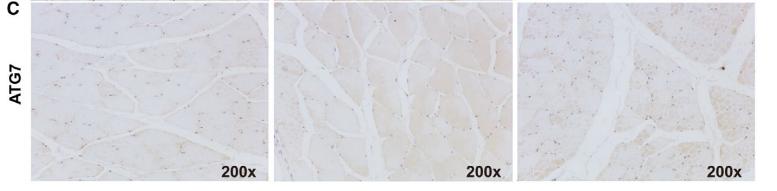
FIGURE 4|Effect of calycosin on autophagy in muscle of 5/6 Nx rats. A, Representative images of autophagosomes observed in muscle of rat using TEM. B-E, Representative images and scores of LC3A/B and ATG7 expression in muscle of rats using IHC staining (×200). Bar = 50 µm. *P < 0.05 compared to the sham group. ##P < 0.01 compared to the 5/6 Nx model group

Application: WB    Species: rat    Sample: muscles

FIGURE 5|Effect of calycosin on the expression of CARM1 and H3R17me2a,and related proteins in rat muscles. A-B,Representative images and scores of the expression of CARM1 and H3R17me2a in muscle sections using IHC staining (×200).Bar = 50 µm. *P < 0.05 compared to the sham group. ##P < 0.01 compared to the 5/6 Nx model group. C-E, Representative immune blots of key proteins involved in muscle atrophy and proteins associated with the AMPK/SKP2/CARM1 signalling pathway

3). Dexamethasone Promotes Autophagy Dependent Ferroptosis of Placental Trophoblast Cells Through GRα. Journal of cellular and molecular medicine, 2025 (PubMed: 40624893) [IF=5.3]

Application: WB    Species: human    Sample: placental tissues

FIGURE 5 DEX activated the AMPKα/BECN1 and ATG5/ATG7/NCOA4 signalling pathways via GRα. (A) Representative western blot results of placental tissues. (B) Representative western blot results showing HTR8/SVeno and TEV-1 expression. Data shown in the bar chart are presented as mean ± SD. Statistical analysis between two groups in (A) was performed by the student t-test, inter-group statistical analysis in (B) was performed by one-way ANOVA. ** in (A) represent p  0.05, and ** represent p 

4). Integrin 51, as a Receptor of Fibronectin, Binds the FbaA Protein of Group A Streptococcus To Initiate Autophagy during Infection. mBio, 2020 (PubMed: 32518187) [IF=5.1]

5). Lupeol inhibits the proliferation and migration of MDA-MB-231 breast cancer cells via a novel crosstalk mechanism between autophagy and the EMT. Food & Function, 2022 (PubMed: 35448900) [IF=5.1]

6). Qingyihuaji Formula promotes apoptosis and autophagy through inhibition of MAPK/ERK and PI3K/Akt/mTOR signaling pathway on pancreatic cancer in vivo and in vitro. Journal of Ethnopharmacology, 2023 (PubMed: 36690307) [IF=4.8]

7). Nephroprotective mechanism of Kunkui Baoshen decoction in diabetic kidney disease: Targeting the HERC2/NCOA4-mediated autophagy-dependent ferroptosis pathway. World journal of diabetes, 2025 (PubMed: 41113495) [IF=4.2]

Application: WB    Species: human    Sample: HK-2 cells
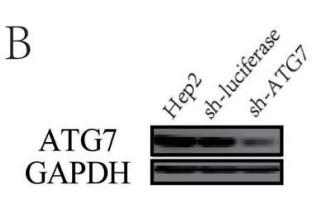
Figure 10. Kunkui Baoshen decoction modulates ferroptosis by regulating nuclear receptor coactivator 4-mediated ferritinophagy. A-G: Western blot and quantitative reverse transcription-polymerase chain reaction analyses of autophagy related 7 (ATG7), nuclear receptor coactivator 4 (NCOA4), microtubule-associated protein light chain 3 (LC3), sequestosome 1 (SQSTM1/p62), and ferritin heavy chain 1 (FTH1) in normal and high glucose groups; H: Co-localization of ferritinophagy-related proteins observed by immunofluorescence double staining in human kidney-2 cells (scale bars = 50 μm); I-O: Western blot and quantitative reverse transcription-polymerase chain reaction analyses of ATG7, NCOA4, LC3, SQSTM1/p62, and FTH1 in the four groups; P-V: Western blot analysis of ATG7, glutathione peroxidase 4, solute carrier family 7 member 11, LC3, SQSTM1/p62, and FTH1 after NCOA4 knockdown. NG: Normal group; HG: High glucose; ATG7: Autophagy related 7; NCOA4: Nuclear receptor coactivator 4; LC3: Microtubule-associated protein light chain 3; SQSTM1/p62: Sequestosome 1; FTH1: Ferritin heavy chain 1; Fer-1: Ferrostatin-1; KKBS:: Kunkui Baoshen decoction; GPX4: Glutathione peroxidase 4; SLC7A11: Solute carrier family 7 member 11; GAPDH: Glyceraldehyde 3-phosphate dehydrogenase; si-NC: Negative control small interfering RNA; si-NCOA4: Nuclear receptor coactivator 4-targeting small interfering RNA. aP < 0.05 vs normal group, bP < 0.01 vs normal group, dP < 0.0001 vs normal group; eP < 0.05 vs high glucose group, fP < 0.01 vs high glucose group, gP < 0.001 vs high glucose group, hP < 0.0001 vs high glucose group; iP < 0.05 vs high glucose + ferrostatin-1 group, jP < 0.01 vs high glucose + ferrostatin-1 group, kP < 0.001 vs high glucose + ferrostatin-1 group, lP < 0.0001 vs high glucose + ferrostatin-1 group; mP < 0.05 vs negative control small interfering RNA group; nP < 0.05 vs nuclear receptor coactivator 4-targeting small interfering RNA group, and oP < 0.01 vs nuclear receptor coactivator 4-targeting small interfering RNA group.

8). Respiratory Syncytial Virus Replication Is Promoted by Autophagy-Mediated Inhibition of Apoptosis. Journal of Virology, 2018 (PubMed: 29386287) [IF=4.0]

Application: WB    Species: human    Sample: Hep2 cells

Figure 5. |Inhibition of autophagy with specific shRNA targeting ATG5, ATG7 or BECN1 reduces RSV replication. (A-C) Hep2 cells stably expressing specific shRNA against ATG5 (Hep2-sh-ATG5), ATG7 (Hep2-sh-ATG7), BECN1 (Hep2-sh-BECN1) or luciferase (Hep2-sh-luciferase) were established as described in Materials and Methods. The silencing efficiency of ATG5 shRNA (A), ATG7 shRNA (B) and BECN1 shRNA (C) were validated by immunoblotting with anti-ATG5, anti-ATG7, anti-BECN1 and anti-GAPDH antibodies respectively.

9). Pelargonic acid vanillylamide alleviates hepatic autophagy and ER stress in hepatic steatosis model. Food and Chemical Toxicology, 2023 (PubMed: 37611858) [IF=3.9]

10). Alginate oligosaccharides improve high-fat induced hepatic steatosis via PGC-1α-mediated lipophagy and fatty acid β-oxidation pathway. Journal of Functional Foods, 2023 [IF=3.8]

Application: WB    Species: Mouse    Sample: livers

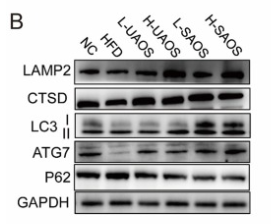
Fig. 4. Effects of AOS on enhancing the lipophagy and free fatty acid (FFA) β-oxidation level in the NAFLD mouse livers. (A) the mRNA expression in the lipophagy and FFA β-oxidation pathways, (B) western blot results of lipophagy pathway, (C) the protein levels of lipophagy pathway, (D) western blot results of FFA β-oxidation pathway, (E) the protein levels of FFA β-oxidation pathway. The data are shown as the mean ± SEM. Values with different letters represent significant differences (p < 0.05)..

Load more

Restrictive clause


Affinity Biosciences tests all products strictly. Citations are provided as a resource for additional applications that have not been validated by Affinity Biosciences. Please choose the appropriate format for each application and consult Materials and Methods sections for additional details about the use of any product in these publications.

For Research Use Only.
Not for use in diagnostic or therapeutic procedures. Not for resale. Not for distribution without written consent. Affinity Biosciences will not be held responsible for patent infringement or other violations that may occur with the use of our products. Affinity Biosciences, Affinity Biosciences Logo and all other trademarks are the property of Affinity Biosciences LTD.