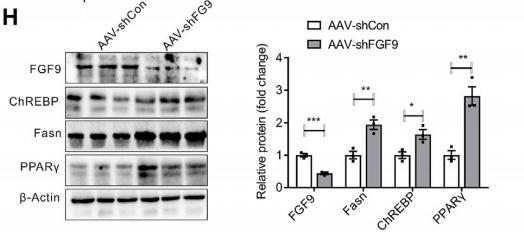
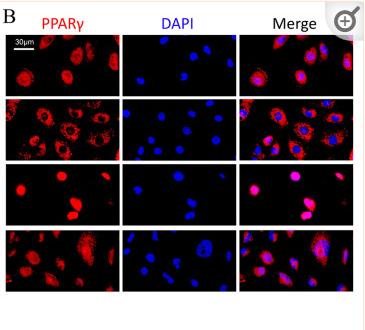
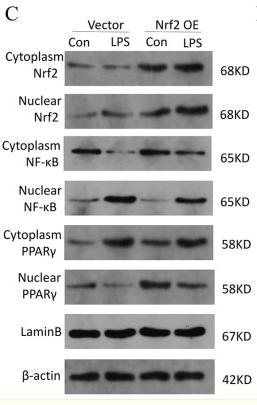
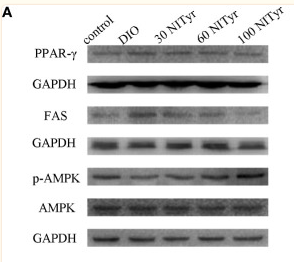
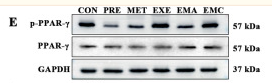
Product: PPAR gamma Antibody
Catalog: AF6284
Description: Rabbit polyclonal antibody to PPAR gamma
Application: WB IHC IF/ICC
Cited expt.: WB, IHC, IF/ICC
Reactivity: Human, Mouse, Rat
Prediction: Pig, Bovine, Horse, Sheep, Rabbit, Dog
Mol.Wt.: 55-70kDa; 58kD(Calculated).
Uniprot: P37231
RRID: AB_2835135

View similar products>>

   Size Price Inventory
 100ul $280 In stock
 200ul $350 In stock

Lead Time: Same day delivery

For pricing and ordering contact:
Local distributors

Product Info

Source:
Rabbit
Application:
WB 1:500-1:2000, IHC 1:50-1:200, IF/ICC 1:100-1:500
*The optimal dilutions should be determined by the end user. For optimal experimental results, antibody reuse is not recommended.
*Tips:

WB: For western blot detection of denatured protein samples. IHC: For immunohistochemical detection of paraffin sections (IHC-p) or frozen sections (IHC-f) of tissue samples. IF/ICC: For immunofluorescence detection of cell samples. ELISA(peptide): For ELISA detection of antigenic peptide.

Reactivity:
Human,Mouse,Rat
Prediction:
Pig(92%), Bovine(92%), Horse(100%), Sheep(92%), Rabbit(100%), Dog(100%)
Clonality:
Polyclonal
Specificity:
PPAR gamma Antibody detects endogenous levels of total PPAR gamma.
RRID:
AB_2835135
Cite Format: Affinity Biosciences Cat# AF6284, RRID:AB_2835135.
Conjugate:
Unconjugated.
Purification:
The antiserum was purified by peptide affinity chromatography using SulfoLink™ Coupling Resin (Thermo Fisher Scientific).
Storage:
Rabbit IgG in phosphate buffered saline , pH 7.4, 150mM NaCl, 0.02% sodium azide and 50% glycerol. Store at -20 °C. Stable for 12 months from date of receipt.
Alias:

Fold/Unfold

CIMT1; GLM1; NR1C3; Nuclear receptor subfamily 1 group C member 3; OTTHUMP00000185032; OTTHUMP00000185036; Peroxisome proliferator activated nuclear receptor gamma variant 1; Peroxisome proliferator activated receptor gamma 1; Peroxisome Proliferator Activated Receptor gamma; Peroxisome proliferator-activated receptor gamma; PPAR gamma; PPAR-gamma; PPARG; PPARG_HUMAN; PPARG1; PPARG2; PPARgamma;

Immunogens

Immunogen:

A synthesized peptide derived from human PPAR gamma, corresponding to a region within the internal amino acids.

Uniprot:
Gene(ID):
Expression:
P37231 PPARG_HUMAN:

Highest expression in adipose tissue. Lower in skeletal muscle, spleen, heart and liver. Also detectable in placenta, lung and ovary.

Description:
The protein encoded by this gene is a member of the peroxisome proliferator-activated receptor (PPAR) subfamily of nuclear receptors. PPARs form heterodimers with retinoid X receptors (RXRs) and these heterodimers regulate transcription of various genes. Three subtypes of PPARs are known: PPAR-alpha, PPAR-delta, and PPAR-gamma.
Sequence:
MGETLGDSPIDPESDSFTDTLSANISQEMTMVDTEMPFWPTNFGISSVDLSVMEDHSHSFDIKPFTTVDFSSISTPHYEDIPFTRTDPVVADYKYDLKLQEYQSAIKVEPASPPYYSEKTQLYNKPHEEPSNSLMAIECRVCGDKASGFHYGVHACEGCKGFFRRTIRLKLIYDRCDLNCRIHKKSRNKCQYCRFQKCLAVGMSHNAIRFGRMPQAEKEKLLAEISSDIDQLNPESADLRALAKHLYDSYIKSFPLTKAKARAILTGKTTDKSPFVIYDMNSLMMGEDKIKFKHITPLQEQSKEVAIRIFQGCQFRSVEAVQEITEYAKSIPGFVNLDLNDQVTLLKYGVHEIIYTMLASLMNKDGVLISEGQGFMTREFLKSLRKPFGDFMEPKFEFAVKFNALELDDSDLAIFIAVIILSGDRPGLLNVKPIEDIQDNLLQALELQLKLNHPESSQLFAKLLQKMTDLRQIVTEHVQLLQVIKKTETDMSLHPLLQEIYKDLY

Predictions

Predictions:

Score>80(red) has high confidence and is suggested to be used for WB detection. *The prediction model is mainly based on the alignment of immunogen sequences, the results are for reference only, not as the basis of quality assurance.

Species
Results
Score
Horse
100
Dog
100
Rabbit
100
Pig
92
Bovine
92
Sheep
92
Xenopus
69
Zebrafish
62
Chicken
0
Model Confidence:
High(score>80) Medium(80>score>50) Low(score<50) No confidence

Research Backgrounds

Function:

Nuclear receptor that binds peroxisome proliferators such as hypolipidemic drugs and fatty acids. Once activated by a ligand, the nuclear receptor binds to DNA specific PPAR response elements (PPRE) and modulates the transcription of its target genes, such as acyl-CoA oxidase. It therefore controls the peroxisomal beta-oxidation pathway of fatty acids. Key regulator of adipocyte differentiation and glucose homeostasis. ARF6 acts as a key regulator of the tissue-specific adipocyte P2 (aP2) enhancer. Acts as a critical regulator of gut homeostasis by suppressing NF-kappa-B-mediated proinflammatory responses. Plays a role in the regulation of cardiovascular circadian rhythms by regulating the transcription of ARNTL/BMAL1 in the blood vessels (By similarity).

(Microbial infection) Upon treatment with M.tuberculosis or its lipoprotein LpqH, phosphorylation of MAPK p38 and IL-6 production are modulated, probably via this protein.

PTMs:

O-GlcNAcylation at Thr-84 reduces transcriptional activity in adipocytes.

Phosphorylated in basal conditions and dephosphorylated when treated with the ligand. May be dephosphorylated by PPP5C. The phosphorylated form may be inactive and dephosphorylation at Ser-112 induces adipogenic activity (By similarity).

Subcellular Location:

Nucleus. Cytoplasm.
Note: Redistributed from the nucleus to the cytosol through a MAP2K1/MEK1-dependent manner. NOCT enhances its nuclear translocation.

Extracellular region or secreted Cytosol Plasma membrane Cytoskeleton Lysosome Endosome Peroxisome ER Golgi apparatus Nucleus Mitochondrion Manual annotation Automatic computational assertionSubcellular location
Tissue Specificity:

Highest expression in adipose tissue. Lower in skeletal muscle, spleen, heart and liver. Also detectable in placenta, lung and ovary.

Family&Domains:

The 9aaTAD motif is a transactivation domain present in a large number of yeast and animal transcription factors.

Belongs to the nuclear hormone receptor family. NR1 subfamily.

Research Fields

· Environmental Information Processing > Signal transduction > AMPK signaling pathway.   (View pathway)

· Human Diseases > Neurodegenerative diseases > Huntington's disease.

· Human Diseases > Cancers: Overview > Pathways in cancer.   (View pathway)

· Human Diseases > Cancers: Overview > Transcriptional misregulation in cancer.

· Human Diseases > Cancers: Specific types > Thyroid cancer.   (View pathway)

· Organismal Systems > Endocrine system > PPAR signaling pathway.

· Organismal Systems > Aging > Longevity regulating pathway.   (View pathway)

· Organismal Systems > Development > Osteoclast differentiation.   (View pathway)

References

1). FABP4 as a Mediator of Lipid Metabolism and Pregnant Uterine Dysfunction in Obesity. Advanced science (Weinheim, Baden-Wurttemberg, Germany), 2025 (PubMed: 40192565) [IF=15.1]

Application: WB    Species: Mouse    Sample:
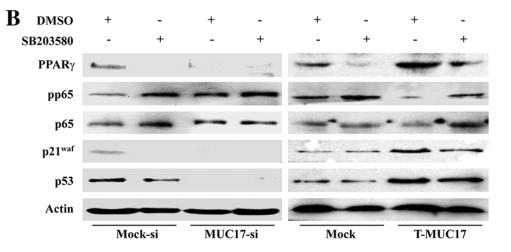
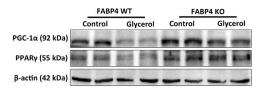
Figure 4 Mitochondrial dysfunction contributes to weakened uterine contractions. A) Schematic diagram of mitochondrial dysfunction caused by obesity and HFD, created with BioRender.com. B–F) Representative line and bar graphs of OCR in PA-induced USMCs, including basal respiration, maximal respiration, respiratory reserve capacity, proton leak, and ATP production (n = 5 for BSA group, n = 9 for PA group; samples pooled from 3 mice per sample). G) The ATP levels in the uterine myometrium of late-pregnant obese mice (n = 6 samples per group, pooled from 3 mice per sample). H) The ATP levels in the PA-treated cells (n = 6 per group). I) The ATP levels in the uterine myometrium of late-pregnant mice with AAV injection, measured using the ATP Assay Kit (n = 13 for AAV-NC group, n = 16 for AAV-FABP4 group; pooled from 3 mice per sample). J,K) Representative images of Rhod-2 AM (red) staining for mitochondrial calcium and Mito-Tracker (green) labeling for mitochondria in USMCs (n = 21 for BSA group, n = 24 for PA group; pooled from 3 mice per sample), scale bar = 20 µm. L,M) Mitochondrial membrane potential analysis using the JC-1 probe (n = 8 in the BSA group and n = 9 in the PA group), scale bar = 20 µm. N,O) Immunofluorescent images of uterine myometrium stained with TOMM20 (green) and nuclei (blue) in BSA- and PA-treated groups (n = 4 per group), scale bar = 10 µm. P,Q) Western blot and quantitative analysis of PGC-1α and PPAR γ expression in uterine smooth muscle tissue from HFD pregnant mice (n = 6 for control group, n = 9 for obesity group; pooled from 3 mice per sample). R,S) Western blot and quantitative analysis of PGC-1α and PPAR γ expression in USMCs treated with BSA or PA (n = 6 per group). All experiments were repeated 2–3 times with consistent results. The values are expressed as the means ± SDs. *p < 0.05, **p < 0.01, and ***p < 0.001 versus the control group.

2). Atomically precise gold nanoclusters as ROS-scavenging clusterzymes to treat high-fat diet-induced obesity. Chemical Engineering Journal, 2024 [IF=13.3]

3). Mucin 17 inhibits the progression of human gastric cancer by limiting inflammatory responses through a MYH9-p53-RhoA regulatory feedback loop. JOURNAL OF EXPERIMENTAL & CLINICAL CANCER RESEARCH, 2019 (PubMed: 31262330) [IF=11.3]

Application: WB    Species: human    Sample: AGS cells and MKN45 cells

Fig. 5| MUC17 protects GC cells against inflammatory stimulation by regulating the p38 pathway. a MUC17 regulated the expression of pJNK,pERK, and pp38 MAPK in MUC17 knocked-down AGS cells (left) and truncated MUC17 overexpressed MKN45 cells (right).b The effect of the p38 inhibitor SB203580 on the expression of NFκB pathway proteins and G2/M phase arrest markers in MUC17 knocked-down AGS cells (left) and truncated MUC17 overexpressed MKN45 cells (right).

4). Antifibrotic Effects of Tetrahedral Framework Nucleic Acids by Inhibiting Macrophage Polarization and Macrophage-myofibroblast Transition in Bladder Remodeling. Advanced Healthcare Materials, 2023 (PubMed: 36603196) [IF=10.0]

5). Dioscin ameliorates murine ulcerative colitis by regulating macrophage polarization. Pharmacological research, 2021 (PubMed: 34343656) [IF=9.1]

6). Caveolin-1 mitigates the advancement of metabolic dysfunction-associated steatotic liver disease by reducing endoplasmic reticulum stress and pyroptosis through the restoration of cholesterol homeostasis. International journal of biological sciences, 2025 (PubMed: 39781461) [IF=8.2]

7). Peroxisome proliferator-activated receptor gamma (PPARγ) promotes the morula-to-blastocyst transition in Tibetan sheep embryos by enhancing mitophagy through suppression of the AKT/mTOR pathway. International journal of biological macromolecules, 2025 (PubMed: 41110574) [IF=7.7]

8). Enhancing polysaccharide release rate from sea cucumber powder by ultrafine milling: Improving ability to interfere with atherosclerosis. International journal of biological macromolecules, 2025 (PubMed: 40840750) [IF=7.7]

9). CircITGB5 regulates the proliferation and adipogenic differentiation of chicken intramuscular preadipocytes through the miR-181b-5p/CPT1A axis. International journal of biological macromolecules, 2024 (PubMed: 39577521) [IF=7.7]

10). Truncated thrombospondin-1 polypeptide alleviates non-alcoholic fatty liver disease induced by palmitic acid and high-fat diets. International journal of biological macromolecules, 2025 (PubMed: 41109376) [IF=7.7]

Load more

Restrictive clause


Affinity Biosciences tests all products strictly. Citations are provided as a resource for additional applications that have not been validated by Affinity Biosciences. Please choose the appropriate format for each application and consult Materials and Methods sections for additional details about the use of any product in these publications.

For Research Use Only.
Not for use in diagnostic or therapeutic procedures. Not for resale. Not for distribution without written consent. Affinity Biosciences will not be held responsible for patent infringement or other violations that may occur with the use of our products. Affinity Biosciences, Affinity Biosciences Logo and all other trademarks are the property of Affinity Biosciences LTD.