Product: Phospho-CREB (Ser133) Antibody
Catalog: AF3189
Description: Rabbit polyclonal antibody to Phospho-CREB (Ser133)
Application: WB IHC IF/ICC
Cited expt.: WB, IHC, IF/ICC
Reactivity: Human, Mouse, Rat
Prediction: Pig, Bovine, Horse, Sheep, Rabbit, Dog, Chicken, Xenopus
Mol.Wt.: 43kDa; 37kD(Calculated).
Uniprot: P16220
RRID: AB_2834621

View similar products>>

   Size Price Inventory
 100ul $280 In stock
 200ul $350 In stock

Lead Time: Same day delivery

For pricing and ordering contact:
Local distributors

Product Info

Source:
Rabbit
Application:
WB 1:500-1:2000, IHC 1:100-1:500, IF/ICC 1:100-1:500
*The optimal dilutions should be determined by the end user. For optimal experimental results, antibody reuse is not recommended.
*Tips:

WB: For western blot detection of denatured protein samples. IHC: For immunohistochemical detection of paraffin sections (IHC-p) or frozen sections (IHC-f) of tissue samples. IF/ICC: For immunofluorescence detection of cell samples. ELISA(peptide): For ELISA detection of antigenic peptide.

Reactivity:
Human,Mouse,Rat
Prediction:
Pig(100%), Bovine(100%), Horse(100%), Sheep(100%), Rabbit(100%), Dog(100%), Chicken(100%), Xenopus(100%)
Clonality:
Polyclonal
Specificity:
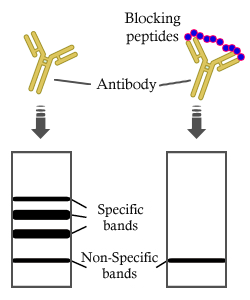
Phospho-CREB (Ser133) Antibody detects endogenous levels of CREB only when phosphorylated at Serine 133.
RRID:
AB_2834621
Cite Format: Affinity Biosciences Cat# AF3189, RRID:AB_2834621.
Conjugate:
Unconjugated.
Purification:
The antibody is from purified rabbit serum by affinity purification via sequential chromatography on phospho-peptide and non-phospho-peptide affinity columns.
Storage:
Rabbit IgG in phosphate buffered saline , pH 7.4, 150mM NaCl, 0.02% sodium azide and 50% glycerol. Store at -20 °C. Stable for 12 months from date of receipt.
Alias:

Fold/Unfold

Active transcription factor CREB; cAMP response element binding protein 1; cAMP response element binding protein; cAMP responsive element binding protein 1; cAMP-responsive element-binding protein 1; CREB; CREB-1; CREB1; CREB1_HUMAN; Cyclic AMP-responsive element-binding protein 1; MGC9284; OTTHUMP00000163864; OTTHUMP00000163865; OTTHUMP00000206660; OTTHUMP00000206662; OTTHUMP00000206667; Transactivator protein;

Immunogens

Immunogen:

A synthesized peptide derived from human CREB around the phosphorylation site of Ser133.

Uniprot:
Gene(ID):
Description:
This gene encodes a transcription factor that is a member of the leucine zipper family of DNA binding proteins. This protein binds as a homodimer to the cAMP-responsive element, an octameric palindrome.
Sequence:
MTMESGAENQQSGDAAVTEAENQQMTVQAQPQIATLAQVSMPAAHATSSAPTVTLVQLPNGQTVQVHGVIQAAQPSVIQSPQVQTVQSSCKDLKRLFSGTQISTIAESEDSQESVDSVTDSQKRREILSRRPSYRKILNDLSSDAPGVPRIEEEKSEEETSAPAITTVTVPTPIYQTSSGQYIAITQGGAIQLANNGTDGVQGLQTLTMTNAAATQPGTTILQYAQTTDGQQILVPSNQVVVQAASGDVQTYQIRTAPTSTIAPGVVMASSPALPTQPAEEAARKREVRLMKNREAARECRRKKKEYVKCLENRVAVLENQNKTLIEELKALKDLYCHKSD

Predictions

Predictions:

Score>80(red) has high confidence and is suggested to be used for WB detection. *The prediction model is mainly based on the alignment of immunogen sequences, the results are for reference only, not as the basis of quality assurance.

Species
Results
Score
Pig
100
Horse
100
Bovine
100
Sheep
100
Dog
100
Xenopus
100
Chicken
100
Rabbit
100
Zebrafish
0
Model Confidence:
High(score>80) Medium(80>score>50) Low(score<50) No confidence

Research Backgrounds

Function:

Phosphorylation-dependent transcription factor that stimulates transcription upon binding to the DNA cAMP response element (CRE), a sequence present in many viral and cellular promoters. Transcription activation is enhanced by the TORC coactivators which act independently of Ser-133 phosphorylation. Involved in different cellular processes including the synchronization of circadian rhythmicity and the differentiation of adipose cells.

PTMs:

Stimulated by phosphorylation. Phosphorylation of both Ser-133 and Ser-142 in the SCN regulates the activity of CREB and participates in circadian rhythm generation. Phosphorylation of Ser-133 allows CREBBP binding. In liver, phosphorylation is induced by fasting or glucagon in a circadian fashion (By similarity). CREBL2 positively regulates phosphorylation at Ser-133 thereby stimulating CREB1 transcriptional activity (By similarity). Phosphorylated upon calcium influx by CaMK4 and CaMK2 on Ser-133. CaMK4 is much more potent than CaMK2 in activating CREB. Phosphorylated by CaMK2 on Ser-142. Phosphorylation of Ser-142 blocks CREB-mediated transcription even when Ser-133 is phosphorylated. Phosphorylated by CaMK1 (By similarity). Phosphorylation of Ser-271 by HIPK2 in response to genotoxic stress promotes CREB1 activity, facilitating the recruitment of the coactivator CBP. Phosphorylated at Ser-133 by RPS6KA3, RPS6KA4 and RPS6KA5 in response to mitogenic or stress stimuli. Phosphorylated by TSSK4 on Ser-133.

Sumoylated with SUMO1. Sumoylation on Lys-304, but not on Lys-285, is required for nuclear localization of this protein. Sumoylation is enhanced under hypoxia, promoting nuclear localization and stabilization.

Subcellular Location:

Nucleus.

Extracellular region or secreted Cytosol Plasma membrane Cytoskeleton Lysosome Endosome Peroxisome ER Golgi apparatus Nucleus Mitochondrion Manual annotation Automatic computational assertionSubcellular location
Family&Domains:

Belongs to the bZIP family.

Research Fields

· Environmental Information Processing > Signal transduction > cGMP-PKG signaling pathway.   (View pathway)

· Environmental Information Processing > Signal transduction > cAMP signaling pathway.   (View pathway)

· Environmental Information Processing > Signal transduction > PI3K-Akt signaling pathway.   (View pathway)

· Environmental Information Processing > Signal transduction > AMPK signaling pathway.   (View pathway)

· Environmental Information Processing > Signal transduction > TNF signaling pathway.   (View pathway)

· Human Diseases > Endocrine and metabolic diseases > Insulin resistance.

· Human Diseases > Neurodegenerative diseases > Huntington's disease.

· Human Diseases > Substance dependence > Cocaine addiction.

· Human Diseases > Substance dependence > Amphetamine addiction.

· Human Diseases > Substance dependence > Alcoholism.

· Human Diseases > Infectious diseases: Bacterial > Tuberculosis.

· Human Diseases > Infectious diseases: Viral > Hepatitis B.

· Human Diseases > Infectious diseases: Viral > Human papillomavirus infection.

· Human Diseases > Infectious diseases: Viral > HTLV-I infection.

· Human Diseases > Cancers: Overview > Viral carcinogenesis.

· Human Diseases > Cancers: Specific types > Prostate cancer.   (View pathway)

· Organismal Systems > Aging > Longevity regulating pathway.   (View pathway)

· Organismal Systems > Circulatory system > Adrenergic signaling in cardiomyocytes.   (View pathway)

· Organismal Systems > Development > Osteoclast differentiation.   (View pathway)

· Organismal Systems > Immune system > Antigen processing and presentation.   (View pathway)

· Organismal Systems > Environmental adaptation > Circadian rhythm.   (View pathway)

· Organismal Systems > Environmental adaptation > Circadian entrainment.

· Organismal Systems > Nervous system > Cholinergic synapse.

· Organismal Systems > Nervous system > Dopaminergic synapse.

· Organismal Systems > Endocrine system > Insulin secretion.   (View pathway)

· Organismal Systems > Endocrine system > Estrogen signaling pathway.   (View pathway)

· Organismal Systems > Endocrine system > Melanogenesis.

· Organismal Systems > Endocrine system > Thyroid hormone synthesis.

· Organismal Systems > Endocrine system > Glucagon signaling pathway.

· Organismal Systems > Endocrine system > Renin secretion.

· Organismal Systems > Endocrine system > Aldosterone synthesis and secretion.

· Organismal Systems > Endocrine system > Relaxin signaling pathway.

· Organismal Systems > Excretory system > Vasopressin-regulated water reabsorption.

References

1). Targeting P2Y14R protects against necroptosis of intestinal epithelial cells through PKA/CREB/RIPK1 axis in ulcerative colitis. Nature communications, 2024 (PubMed: 38453952) [IF=16.6]

2). Neuropeptide Precursor VGF Promotes Neuroendocrine Differentiation and Cancer-Associated Fibroblast Activation in Small Cell Lung Cancer. Cancer research, 2025 (PubMed: 40857617) [IF=12.5]

Application: WB    Species: human    Sample: NCI-H82 cell

Figure 3. VGF drives NE differentiation of SCLC-A by activating CREB signaling and upregulating ASCL1. A, Volcano plot showing DEGs in NCI-H128 cells following VGF knockdown (shVGF) compared with negative control (NC). Down, downregulated; FC, fold change; NotSig, not significant; Up, upregulated. B, Venn diagram showing overlapping downregulated genes in NCI-H128 cells after VGF knockdown and in non–SCLC-A cells compared with SCLC-A cells, using data from the Cancer Cell Line Encyclopedia database. C, Western blot analysis of VGF, pCREB, CREB, and TOX3 in NCI-H128 cells following VGF knockdown. D, Co-IP assay demonstrating the interaction between CREB and TOX3 after TLQP-21 (10 µmol/L) stimulation for 24 hours. E, Comparison of potential transcription factors for ASCL1 from ChIP-seq databases and transcription factor prediction databases. F, ChIP–qPCR analysis of CREB binding to the ASCL1 promoter following TLQP-21 (10 µmol/L) stimulation for 24 hours. G, Predicted CREB-binding motif on the ASCL1 promoter using the JASPAR database, with the mutant site highlighted in red. H, Dual-luciferase reporter assay assessing CREB-driven transcription of ASCL1 after mutating the binding motif and TLQP-21 (10 µmol/L) stimulation for 24 hours. I, Dual-luciferase reporter assay assessing CREB-driven transcription of ASCL1 following treatment with SB290157 (4 µmol/L) or 666-15 (100 nmol/L) alongside TLQP-21 (10 µmol/L) stimulation for 24 hours. MUT, mutant; WT, wild-type. J, Western blot analysis of pCREB, CREB, ASCL1, CHGA, and SYP in NCI-H82 cells following TLQP-21 (10 µmol/L) stimulation or VGF overexpression. K, Western blot analysis of VGF, pCREB, CREB, ASCL1, CHGA, and SYP in NCI-H82 cells following CREB overexpression. L, RT-qPCR analysis of ASCL1, CHGA, and SYP mRNA levels in NCI-H128 and NCI-H82 cells following TLQP-21 (10 µmol/L) stimulation, SB290157 (4 µmol/L), or 666-15 (100 nmol/L) treatment for 24 hours. M, Western blot analysis of pCREB, CREB, ASCL1, CHGA, and SYP in SCLC cells following TLQP-21 (10 µmol/L) stimulation, SB290157 (4 µmol/L), or 666-15 (100 nmol/L) treatment for 24 hours. N, Western blot analysis of pCREB, CREB, ASCL1, CHGA, and SYP in SCLC cells treated with CM from NCI-H128 cells with high VGF expression, SB290157 (4 µmol/L), or 666-15 (100 nmol/L) for 24 hours. Differences between groups were assessed using the unpaired t test. *, P < 0.05; **, P < 0.01; ***, P < 0.001. n = 3. Data are presented as the means ± SEM.

3). The brain-protective mechanism of fecal microbiota transplantation from young donor mice in the natural aging process via exosome, gut microbiota, and metabolomics analyses. Pharmacological research, 2024 (PubMed: 39053865) [IF=9.1]

Application: WB    Species: Mouse    Sample:

Fig. 3. The cerebral protection effects of FMT in mice against age-associated proteins expression levels. (A, B) Quantified protein levels of the cell cycle arrest related proteins of p53, p21, p16/p14, and Rb in mice hippocampus tissues. Data are shown as the mean ± SD, n = 3 per group. Significance was determined by one-way ANOVA followed by the Dunnett T3 test for comparison of multiple groups, *P < 0.05, **P < 0.01, and ***P < 0.001. (C, D) Quantified protein levels of the DNA damage-related protein ATM, and the cognitive-related proteins synapsin I, synaptophysin and PSD95 in mice hippocampus tissues. Data are shown as the mean ± SD, n = 3 per group. Significance was determined by one-way ANOVA followed by the Dunnett T3 test for comparison of multiple groups, *P < 0.05, **P < 0.01, and ***P < 0.001. (E, F) Quantified protein levels of the cell senescence-related proteins CREB, p-CREB, ERK, p-ERK, AKT, p-AKT in mice hippocampus tissues. Data are shown as the mean ± SD, n = 3 per group. Significance was determined by one-way ANOVA followed by the Dunnett T3 test for comparison of multiple groups, *P < 0.05, **P < 0.01, and ***P < 0.001. (G, H) Quantified protein levels of the c-H2AX and TP53BP1 proteins in bone marrow mesenchymal stem cells. Data are shown as the mean ± SD, n = 3 per group. Significance was determined by one-way ANOVA followed by the Dunnett T3 test for comparison of multiple groups, *P < 0.05, **P < 0.01, and ***P < 0.001. (I, J) Quantified protein levels of the β-galactosidase, c-H2AX, and TP53BP1 proteins in in mice hippocampus tissues. Data are shown as the mean ± SD, n = 3 per group. Significance was determined by one-way ANOVA followed by the Dunnett T3 test for comparison of multiple groups, *P < 0.05, **P < 0.01, and ***P < 0.001.

4). CGRP-releasing PLGA/nHA/GO composite microspheres enhance distraction osteogenesis via activation of the cAMP/PKA/CREB pathway. Materials today. Bio, 2025 (PubMed: 40893374) [IF=8.7]

Application: WB    Species: Rat    Sample:

Fig. 5. Molecular Mechanism Analysis (A) Intracellular cAMP concentration measured by ELISA after 30 min of treatment, normalized to total protein content (n = 3). (B–D) Western blot analysis and quantitative assessment of PKA and CREB phosphorylation levels. (B) Representative Western blot images showing p-PKA (Thr197), total PKA, p-CREB (Ser133), total CREB, and GAPDH expression. (C) Quantitative analysis of p-PKA/total PKA ratio. (D) Quantitative analysis of p-CREB/total CREB ratio. (E) qRT-PCR analysis of osteogenic-related gene mRNA expression after 7 days of osteogenic induction. Relative expression levels of Runx2, Osx, OPN (Spp1), OCN (Bglap), and CyclinD1 normalized to Gapdh internal control using 2^-ΔΔCt^ method (n = 3). (F) Representative Western blot images showing expression of osteogenic proteins Runx2, Osx, OPN, OCN, CyclinD1, and GAPDH loading control. (G) Quantitative analysis of protein expression levels normalized to GAPDH (n = 3).

5). The critical role of ROS in Ermanin-induced melanogenesis. Free radical biology & medicine, 2021 (PubMed: 34560247) [IF=7.1]

6). CXCR4 influences PUFA desaturation and oxidative stress injury in experimental prostatitis mice by activating Fads2 via PPARγ. Free radical biology & medicine, 2024 (PubMed: 39094710) [IF=7.1]

7). Activation of RXRα mitigates maternal separation-induced hippocampal neurodevelopmental impairment in mice by inhibiting oxidative stress and restoring mitochondrial homeostasis. Free radical biology & medicine, 2025 (PubMed: 41275931) [IF=7.1]

8). A possible mechanism to the antidepressant-like effects of 20 (S)-protopanaxadiol based on its target protein 14-3-3 ζ. Journal of Ginseng Research, 2022 (PubMed: 36090685) [IF=6.8]

Application: WB    Species: Rat    Sample:

Fig. 5 Effects of fluoxetine (FLU) or PPD on the immobility time in the forced swimming test (FST) (A) and tail suspension test (TST) (B) in the corticosterone (CORT)-induced depression model. Representative Western blot images of GSK 3β, p-Ser9 GSK 3β, CREB, p-Ser133 CREB, BDNF, and β-actin expression levels (C). Western blot analysis showing relative protein levels of p-Ser133 CREB (D), p-Ser9 GSK 3β (E), and BDNF (F). ∗p < 0.05 vs. the control group, nsno statistical significance vs. the control group, #p < 0.05 vs. the CORT group.

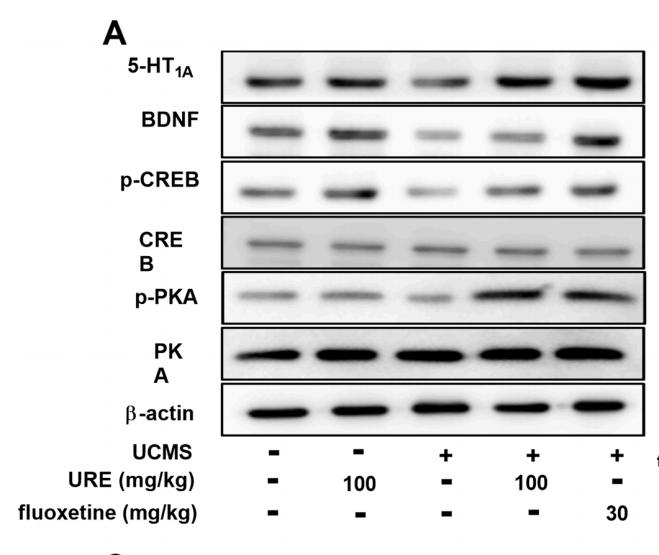
9). Uncaria rhynchophylla ameliorates unpredictable chronic mild stress-induced depression in mice via activating 5-HT1A receptor: Insights from transcriptomics. PHYTOMEDICINE, 2021 (PubMed: 33360346) [IF=6.7]

Application: WB    Species: mice    Sample: hippocampus

Fig. 11. Effects of URE on 5-HT1A signaling pathway. (A) Western blotting analysis of 5-HT1A, BDNF, p-CREB, CREB, p-PKA, and PKA in hippocampus. (B-E) Quantitative data of 5-HT1A (B), BDNF (C), p-CREB/CREB (D), and p-PKA/PKA (E), data represent mean ± SEM (n = 3), ** p < 0.01, *** p < 0.001 vs. the control group; # p < 0.05, ## p < 0.01, ### p < 0.001 vs. the UCMS group. (F) The agonistic effect of URE against 5-HT1A receptor.

10). β-asarone improves cognitive impairment and alleviates autophagy in mice with vascular dementia via the cAMP/PKA/CREB pathway. Phytomedicine : international journal of phytotherapy and phytopharmacology, 2024 (PubMed: 38039902) [IF=6.7]

Load more

Restrictive clause


Affinity Biosciences tests all products strictly. Citations are provided as a resource for additional applications that have not been validated by Affinity Biosciences. Please choose the appropriate format for each application and consult Materials and Methods sections for additional details about the use of any product in these publications.

For Research Use Only.
Not for use in diagnostic or therapeutic procedures. Not for resale. Not for distribution without written consent. Affinity Biosciences will not be held responsible for patent infringement or other violations that may occur with the use of our products. Affinity Biosciences, Affinity Biosciences Logo and all other trademarks are the property of Affinity Biosciences LTD.